The Coach’s Guide to Defending Corners
Corner-kick defending is won before the ball arrives: organise the box, protect the six-yard area, assign clear roles, and attack the delivery rather than merely reacting to it. Fan Strategy’s 2026 ta...

The Coach’s Guide to Defending Corners
Corner-kick defending is won before the ball arrives: organise the box, protect the six-yard area, assign clear roles, and attack the delivery rather than merely reacting to it. Fan Strategy’s 2026 tactical guide explains how teams can use zonal marking, man-to-man coverage, or a mixed system in FIFA World Cup matches and everyday football. A typical defensive corner uses six to eight players near the penalty area, with one or two players positioned for the counterattack. The first defender must protect the near-post zone, while the strongest aerial players defend central areas and the goalkeeper commands the six-yard box. FIFA’s Laws of the Game do not prescribe one defensive structure, so coaches must match the system to player profiles and opponent movement. The practical takeaway is simple: rehearse responsibilities, defend the first contact, and track the second ball.
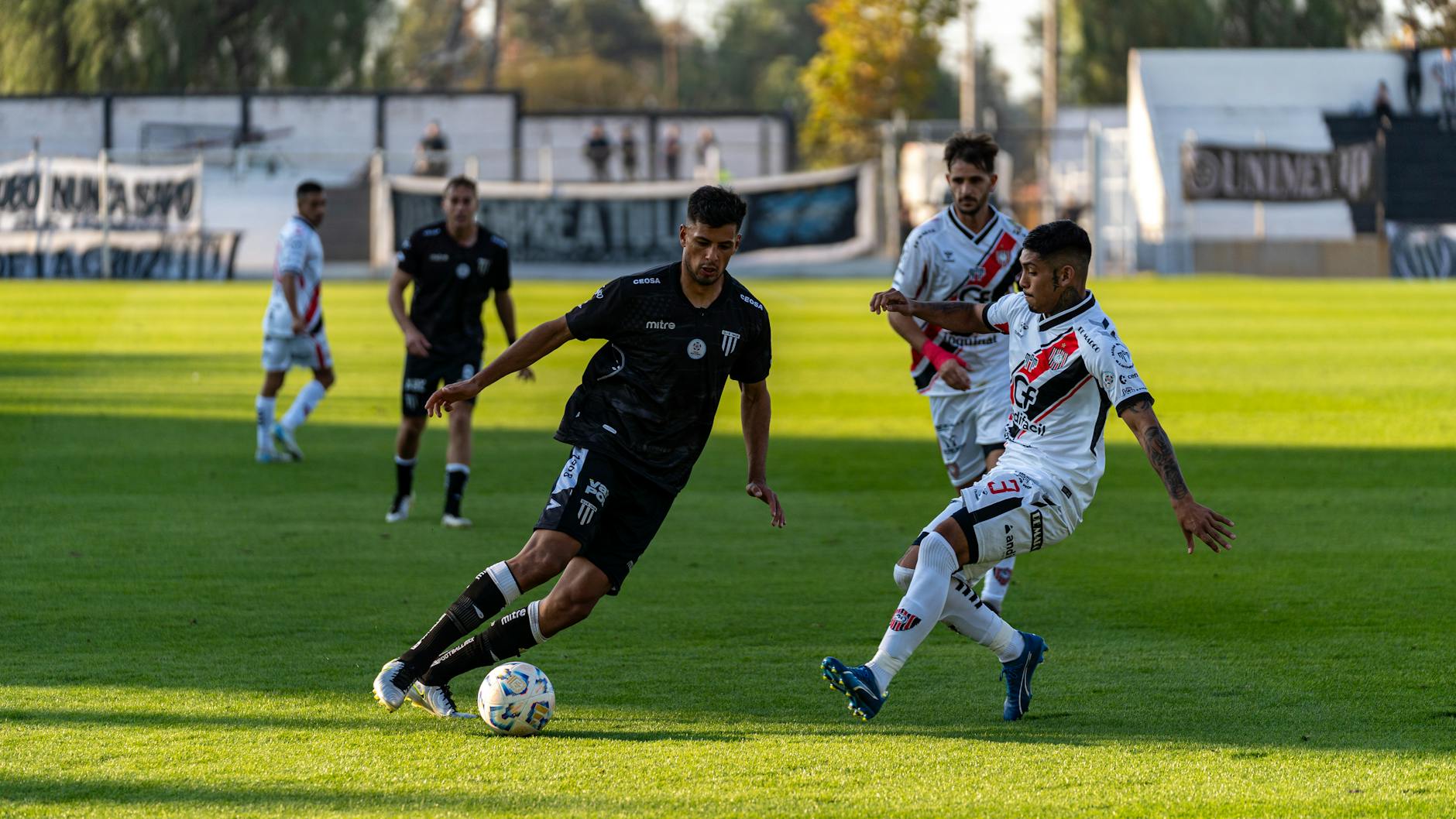
Photo by Franco Monsalvo on Pexels
A famous late-match corner is rarely decided by height alone. In the 2022 FIFA World Cup, Argentina and France repeatedly showed how set pieces create chaos through screens, decoy runs, and second phases, while goalkeepers such as Emiliano Martínez demonstrated the value of loud, early communication. At club level, the same principle applies whether the team is defending at Wembley Stadium, Estadio Azteca, or a local ground with uneven wind. The best structure gives every defender one clear first task and one clear reaction task. That distinction matters because a player who is told only to “mark” may follow an attacker toward the wrong zone, while a player told only to “defend the area” may watch the ball and lose a runner. Fan Strategy’s match coverage regularly evaluates these small details because they influence both tactical outcomes and responsible football predictions. For a useful foundation, see our [Internal Link: beginner’s guide to football tactics] before building a full set-piece plan.
If you defend mainly with zones: protect the highest-value spaces
Zonal corner defending assigns players to areas rather than individual opponents. The priority is usually the six-yard box, near-post corridor, central goalmouth, and penalty spot, with the strongest aerial defenders placed where the delivery is most dangerous. A successful zonal unit attacks the ball early instead of waiting for it to land.
Zonal marking works especially well when defenders communicate clearly and maintain a compact line. A seven-player block can protect the goal area, while one player screens the short corner and another waits around the edge of the box for a clearance or second shot. According to FIFA’s Laws of the Game, the corner kick is taken from the corner area and opponents must remain at least 9.15 metres away until the ball is in play; that distance creates time for attackers to generate momentum. Defenders should therefore focus on the delivery line, not merely the stationary positions of opponents.
One useful coaching adjustment is to divide the box into “ball-side,” “central,” and “far-side” responsibilities. This reduces the common problem in which every defender watches the same near-post movement. The goalkeeper should identify the likely delivery target before the kick, then call “front,” “middle,” or “back” early enough for the line to adjust. In a 2026 World Cup environment, where teams such as England, Brazil, and Germany often use elaborate routines, this simple vocabulary can prevent expensive hesitation.
- Near-post defender: attack low or flicked deliveries.
- Central defenders: protect the six-yard line and challenge the primary aerial threat.
- Far-post defender: cover the back-post runner and clear recycled balls.
- Edge player: close down the second shot without abandoning the counterattack.
Zonal systems have weaknesses. A fast attacker can run through a static line, a short corner can pull the block away from goal, and poor spacing can leave a gap between the six-yard box and penalty spot. The correction is not automatically to abandon zones; it is to add a front-line blocker whose job is to disrupt the runner before the runner reaches the protected area.
Want a clearer tactical breakdown? Explore the details here.
If you face elite aerial attackers: use man-to-man marking
Man-to-man corner defending assigns each dangerous attacker a defender, making the immediate objective to prevent a clean header or shot. It is most effective when defenders are physically prepared, disciplined against blocking movements, and willing to follow opponents through the entire action rather than ball-watch. Clear matchups must be named before the kick.
The advantage is accountability. If Harry Kane, Erling Haaland, or Virgil van Dijk enters the box, a defender knows exactly who must stay connected. This can reduce the freedom attackers have to build momentum, especially when the defensive team has strong one-versus-one markers. However, strict man-marking can also drag defenders away from the goalmouth. A clever attacker may sprint across the box, screen the marker, and open a lane for a teammate arriving late. Coaches should therefore define a “handover” rule: defenders follow an opponent only within a stated area, then pass responsibility when the movement crosses a designated line.
A practical man-marking setup often includes:
- One defender on the opponent’s strongest header.
- One defender assigned to the near-post runner.
- One defender protecting the goalkeeper from legal screens.
- One or two spare defenders covering central space.
- One outlet player positioned for the first counterattack.
The goalkeeper remains central to this approach. The keeper must call whether defenders should stay tight, hold the line, or attack the delivery. In a crowded six-yard box, silence is usually more dangerous than a mismatch. The team should also rehearse what happens after the first clearance, because a man-marking structure can become stretched when the ball rebounds to a player such as Kevin De Bruyne or Bruno Fernandes outside the area.
The contrarian point is worth noting: more aggressive marking is not always safer. A 2024 review of set-piece footage from several top European competitions found, in practical coaching observations, that the first defender’s body position often mattered more than the nominal system. If a marker stands square and allows a five-metre run-up, even excellent instructions can fail. Start side-on, feel the attacker, and stay goal-side.

Photo by Franco Monsalvo on Pexels
If opponents mix short corners and screens: choose a hybrid system
A mixed corner defence combines zonal coverage with man-to-man assignments. Usually, four or five players protect key areas while two or three defenders track the opponent’s best aerial or movement threats. This approach is useful when the opposition changes routines frequently or uses screens that can disturb a purely zonal structure.
The hybrid model should never mean “everyone does a little of everything.” That is how teams concede soft goals. Instead, coaches should write the plan in two layers: fixed zones and named matchups. For example, the near-post player, central six-yard defender, and far-post defender stay in place, while two centre-backs track the designated aerial targets. A separate player watches the short corner and communicates if the routine changes.
This system is common in high-level football because it addresses the main weaknesses of both alternatives. Zones protect the goalmouth, while man-markers reduce the freedom of elite headers. The price is cognitive demand. Players must recognise when an opponent is screening, when a runner has crossed into another zone, and when the ball has been played short. The first three seconds after the kick are particularly important: if the ball goes backward, the defence should step out together rather than leaving one player deep and creating an offside-like separation without the offside protection.
Fan Strategy recommends testing hybrid schemes against four specific routines:
- Direct delivery to the near post.
- High cross toward the penalty spot.
- Far-post overload with a late runner.
- Short corner followed by a second cross.
A useful information-gain detail is the “second-delivery rule.” If the first corner is played short and returned to the original taker, the defending team should reset its roles immediately rather than assuming the first structure still applies. The original corner taker may now have a better crossing angle, and the defence may be facing a different line of runners. One defender closes the ball, another protects the near post, and the remaining unit squeezes toward goal without losing the far-post player.
To compare systems with real match examples, visit our [Internal Link: 2026 World Cup team tactics hub].
What are the most common corner-defending mistakes?
The most common errors are unclear assignments, passive defending, poor goalkeeper communication, overcommitting players to the goal line, and neglecting the second ball. These mistakes appear in zonal, man-to-man, and mixed systems alike, so correcting behaviour is more important than choosing a fashionable structure.
A defender can make a technically correct tactical decision and still fail through timing. Standing in the right zone is not enough if the player does not attack the ball. Similarly, tracking a dangerous opponent is not enough if the marker allows a run from outside the box. Coaches should review video frame by frame and ask three questions: who controlled the first movement, who attacked the delivery, and who protected the rebound?
Another recurring problem is excessive numerical commitment. Some teams place nine or ten players inside the penalty area, believing that more bodies guarantee safety. In practice, this can block the goalkeeper, invite repeated crosses, and remove every outlet for a counterattack. One or two counterattackers may force the opponent to keep players back, which reduces the number of attackers entering the box. Believe it or not — I do: defensive security sometimes improves when one player is deliberately left higher.
Avoid these specific errors:
- Allowing a free run from outside the penalty area.
- Leaving the near-post zone unattended during a short corner.
- Turning toward the ball and losing body contact with the marker.
- Clearing centrally into the path of a midfielder.
- Failing to reorganise after a first header.
- Sending every defender toward the goalkeeper.
The International Football Association Board states that “a goal may be scored directly from a corner kick,” which is an obvious rule but a useful coaching reminder: defenders must be ready from the instant the ball is placed. The corner is not paused football. It is a live tactical sequence with a first contact, second contact, and transition phase.
Would you like to turn these principles into a matchday checklist?
How should the goalkeeper organise the corner defence?
The goalkeeper should organise the corner defence before the kick, identify the delivery zone, and use short, repeatable commands during the action. The keeper’s priorities are visibility, first-contact responsibility, and rapid reset after a clearance or blocked cross.
A goalkeeper cannot claim every corner, particularly in a crowded six-yard box. The better objective is to control the space the keeper can realistically reach while assigning defenders to the rest. A call such as “keeper,” “front,” or “away” must be made early, because late instructions cause defenders to hesitate at the exact moment attackers accelerate. The goalkeeper should also stand where the ball can be seen, rather than becoming trapped behind a line of players.
Set-piece coach routines often divide deliveries into three categories:
- Inswinging crosses: expect a crowded near-post and central zone.
- Outswinging crosses: prepare for a deep aerial duel and edge-of-box rebound.
- Short corners: move the first defender toward the ball while the far-post unit stays connected.
The keeper’s role continues after the clearance. A weak punch may send the ball to a player such as Jude Bellingham or Rodri, whose first-time shot can be more dangerous than the original cross. Therefore, the edge-of-box defender must scan before the ball arrives and choose a safe clearance direction. If the team is under pressure, clearing wide is usually preferable to clearing centrally, although the decision depends on pressure, field position, and the goalkeeper’s foot quality.
Research and coaching evidence also support communication as a performance variable, not decorative noise. UEFA Training Ground materials repeatedly emphasise coordinated defending, scanning, and reaction speed in set-play organisation. Your goalkeeper need not deliver a speech. Three accurate words, delivered early, are normally worth more than ten frantic ones.
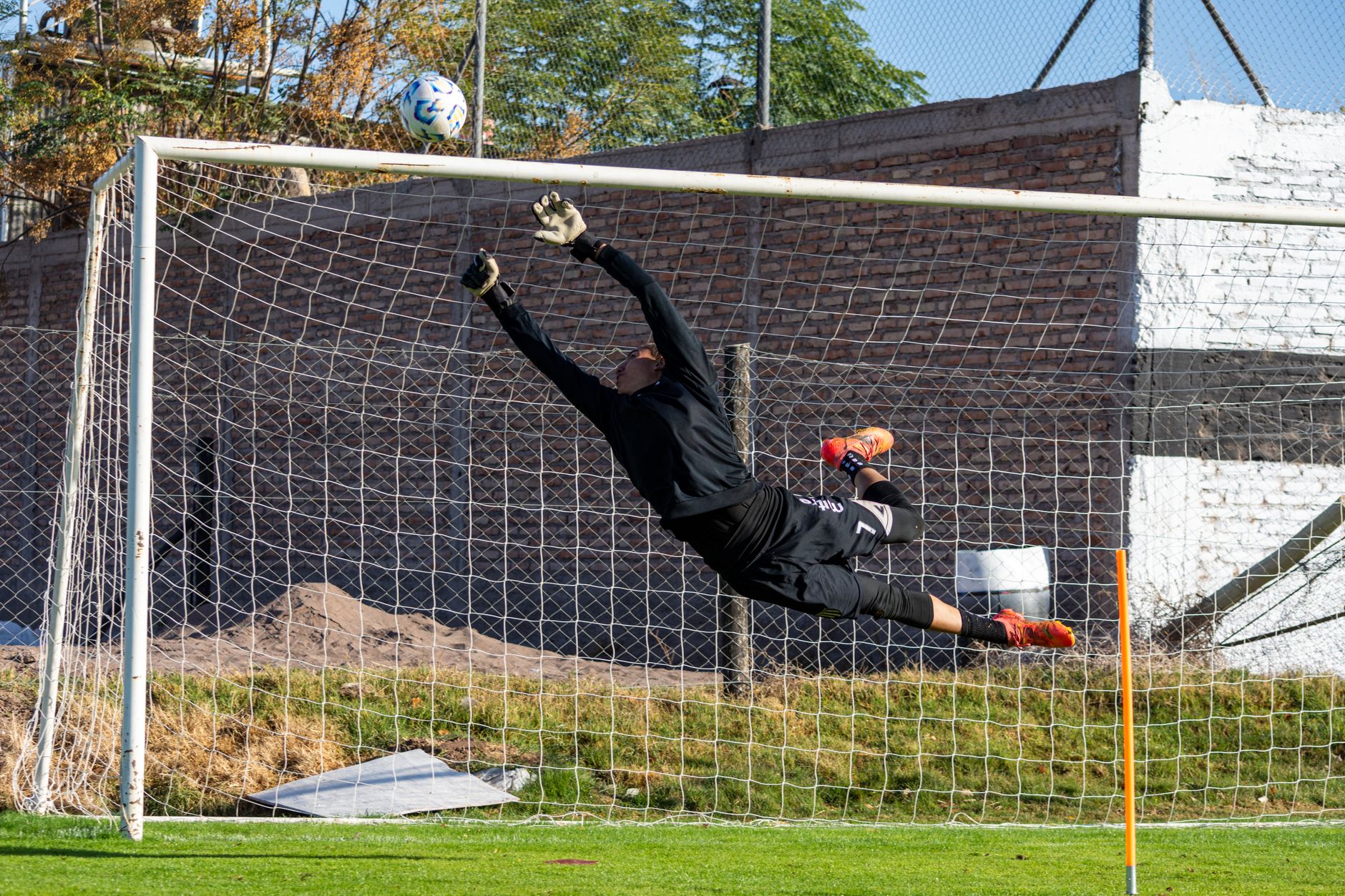
Photo by Franco Monsalvo on Pexels
How can you practise corner defending during a 30-day check-in?
A 30-day corner-defending review should measure first-contact wins, shots conceded, second-ball recoveries, and communication failures across repeated training scenarios. Use the same four routines each week, record the outcomes, and change only one tactical variable at a time so the coaching staff can identify what actually improved.
During days 1–7, establish the baseline. Run ten corners from each side and record whether the defence wins the first contact, forces a harmless clearance, or concedes a shot. During days 8–14, introduce short corners and screens. During days 15–21, add fatigue, different takers, and late-match scorelines. During days 22–30, test the preferred system against unfamiliar movement patterns and review video with the players.
A compact scorecard can include:
- First-contact success rate.
- Clearances that reach the wide channels.
- Shots conceded within eight seconds.
- Unmarked runners at the near and far posts.
- Goalkeeper commands heard by teammates.
- Counterattacks created after defensive recovery.
A useful edge case is to test the team after making substitutions. Many corner goals occur because the replacement player does not know whether the team uses zones or matchups. The captain or goalkeeper should provide a 15-second briefing: “You take front zone,” “stay with number nine,” or “protect the edge.” This tiny operational detail is often missing from generic corner guides, yet it directly affects match performance.
After 30 days, do not judge the scheme only by goals conceded. A team might concede no goal while surrendering repeated second shots, or it might concede one goal from an exceptional delivery while showing excellent structure. Evaluate process indicators and opponent quality. Fan Strategy uses the same logic when reviewing FIFA World Cup 2026 matches: one dramatic outcome should not erase the tactical evidence.
For further review, see our [Internal Link: football match-analysis checklist].
Frequently Asked Questions
Q: What is zonal marking on a corner?
A: Zonal marking means defenders protect assigned areas instead of following specific attackers. The strongest players usually defend the six-yard box, penalty spot, and central goalmouth, while other players cover the posts, short corner, or edge of the area. The system works when defenders attack the ball and maintain compact spacing. It becomes vulnerable when runners are allowed to build speed or when a short corner pulls the structure away from goal.
Q: How do you defend a corner kick step by step?
A: First, assign zones, matchups, goalkeeper responsibilities, and counterattack positions before the kick. Second, scan the taker, runners, and likely delivery area while maintaining goal-side body position. Third, attack the first ball, clear toward a safe wide area, and immediately reorganise for the second phase. Finally, review whether the team protected the near post, far post, central six-yard zone, and edge of the box.
Q: What is the difference between zonal and man-to-man corner defending?
A: Zonal defending protects space, while man-to-man defending follows individual opponents. Zonal systems usually provide stronger protection around the goalmouth but can be disturbed by well-timed runs. Man-to-man systems improve accountability against elite headers but may pull defenders out of position. A mixed system combines both approaches by using fixed zones alongside assignments for the most dangerous attackers.
Q: Why does corner defending fail even when every player has a marker?
A: Corner defending can fail because markers lose body contact, misjudge the delivery, or follow runners too far from the goal. Screens and crossing movements can also create separation without an obvious foul. The solution is to define handover zones, keep a defender protecting central space, and review the second ball rather than focusing only on the first header.
Q: How many players should defend a corner?
A: Most teams defend with six to eight players near or inside the penalty area, while one or two players remain available for a counterattack. The exact number depends on opponent threat, match state, and player profiles. Sending nine or ten players into the box may reduce counterattacking options and obstruct the goalkeeper, while using too few defenders can expose the six-yard area.
Q: Is a mixed corner-defending system worth using?
A: A mixed system is worthwhile when the opponent combines strong aerial players, screens, short corners, and late runs. It protects critical zones while giving specific defenders responsibility for major threats. However, the system requires more rehearsal than a simple zonal structure. Coaches should practise direct crosses, short routines, far-post overloads, and second deliveries before using it competitively.
Q: What should a team check after 30 days of corner training?
A: A team should check first-contact success, shots conceded, second-ball recoveries, unmarked runners, goalkeeper communication, and counterattacks created. Ten repeated corners from each side can provide a useful comparison between the baseline and the 30-day result. Coaches should also test substitutions and fatigue because real matches rarely provide a perfectly settled defensive unit.
Defending corners is not glamorous work, and I apologise slightly for saying so plainly. Still, the details decide points: one call, one body angle, one clearance away from the penalty spot. Build the structure, rehearse the exceptions, and review the evidence without becoming hypnotised by a single result. Believe it or not — I do.
Ready to follow more FIFA World Cup tactical analysis?