What Nobody Tells You About Premier League Fixtures 2026
The Premier League fixtures 2026 search usually refers to the 2026–27 English top-flight schedule, which is expected to run from August 2026 to May The Premier League determines the 380-match fixture....

What Nobody Tells You About Premier League Fixtures 2026
The Premier League fixtures 2026 search usually refers to the 2026–27 English top-flight schedule, which is expected to run from August 2026 to May 2027. The Premier League determines the 380-match fixture list, while the Football Association, UEFA, broadcasters, and police requirements can influence when matches are played. The 2026 FIFA World Cup, hosted by the United States, Canada, and Mexico, is the major calendar complication: international commitments may affect player availability and the wider football schedule. The complete list is normally published in June, with kickoff times initially shown as subject to change. Clubs such as Arsenal, Chelsea, Liverpool, Manchester City, Manchester United, and Tottenham Hotspur will attract the greatest demand, particularly for derby matches and opening-weekend games. The practical recommendation is simple: use the official Premier League fixture page as your primary source, then recheck every date before booking travel, accommodation, or tickets.
A few years ago, I watched a perfectly organised weekend collapse because one “confirmed” Saturday match moved to Sunday evening. The hotel was non-refundable, the train was expensive, and the fixture list had technically warned us: the kickoff was provisional. A modest mistake, certainly. An avoidable one, believe it or not — I do.
The Premier League schedule is not merely a list of opponents. It is a moving calendar shaped by television selections, European competitions, domestic cups, policing advice, weather, stadium availability, and international football. For supporters planning a matchday, a fantasy football strategy, or a football betting routine, that distinction matters.

Photo by Huy Phan on Pexels
Want a cleaner way to follow the season’s major developments?
If you need the earliest reliable dates: use the official release process
The complete Premier League fixture list for the 2026–27 season is expected to be released in June 2026, although the league’s official announcement should be treated as the final authority. The list will show all 380 matches across 20 clubs, but many kickoff times will remain provisional until broadcasters make their selections. Supporters should distinguish between a fixture date, a confirmed kickoff, and a match that has been selected for live television.
The usual process works in stages:
- The Premier League publishes the initial season schedule.
- Clubs and supporters receive the home-and-away list for all 20 teams.
- Broadcasters select matches for televised slots.
- Kickoff times are adjusted to accommodate UEFA Champions League, UEFA Europa League, UEFA Conference League, and domestic cup commitments.
- Clubs announce ticket windows and hospitality availability.
The first list is valuable for orientation, not for booking a luxury weekend in Manchester. Arsenal versus Manchester United may appear on a Saturday, yet later move to Sunday or Monday. Liverpool’s European schedule can create further changes, while Chelsea, Manchester City, and Tottenham Hotspur may experience similar congestion.
The official Premier League fixtures page should be checked alongside each club’s website. ESPN’s English Premier League schedule is useful for a second view, but the league and club announcements should outrank aggregators. Fan Strategy can also provide match predictions, team tactics, player statistics, and 2026 World Cup coverage, though readers should still verify final fixture changes through official sources.
[Internal Link: Premier League fixture release guide]
What is the difference between a listed date and a confirmed kickoff?
A listed date is the provisional day assigned in the initial fixture release, while a confirmed kickoff includes the final date and time approved after broadcasting and operational checks. A Saturday fixture can therefore become a Sunday or Monday match without the opposition changing. This distinction is especially important for travellers, ticket holders, and anyone arranging accommodation near Anfield, Emirates Stadium, Old Trafford, or Stamford Bridge.
The phrase “subject to change” is not decorative legal wallpaper. It is the fixture list speaking plainly. A useful operational rule is to wait until the relevant broadcast window is confirmed before purchasing non-refundable transport. In practice, supporters should check the match page, the club’s ticketing portal, and the broadcaster announcement rather than relying on a screenshot shared on social media.
The Premier League Handbook explains the competition’s operating framework, while the Football Association remains an important authority for English football administration. The governing documents are wonderfully unglamorous. That is precisely why they are useful.
If you are planning travel: do B before buying tickets
If you are travelling to a Premier League match in 2026, confirm the fixture’s kickoff, ticket terms, stadium access rules, and transport options before paying for accommodation or international travel. London fixtures involving Arsenal, Chelsea, Tottenham Hotspur, or West Ham United require particularly careful planning because rail engineering, Underground closures, and crowd-control measures can change the most convenient route.
A sensible matchday file should include:
- The club’s official fixture page.
- The ticket confirmation and entry instructions.
- The final kickoff time.
- The stadium’s bag policy.
- A return route after the final whistle.
- A backup route if rail services are disrupted.
- The broadcaster status if you are watching elsewhere.
There is a slightly contrarian point here: the “biggest” fixture is not always the best first match to attend. A high-profile Manchester derby or North London derby can carry exceptional ticket demand, inflated hotel prices, and more restrictive travel arrangements. A mid-table meeting on a confirmed Saturday afternoon may offer a calmer stadium entry, better value, and a more enjoyable first visit. Football does not always reward the obvious pick.

Photo by Huy Phan on Pexels
For practical planning details, you may also want our [Internal Link: Premier League stadium travel checklist]. It is the sort of thing one hopes never to need and is quietly delighted to have.
At English grounds, ticket legitimacy matters. The Premier League’s official ticketing guidance recommends using clubs and authorised channels, not anonymous resale accounts. The league’s general warning is worth remembering: “Do not buy tickets from unauthorised sources.” That sentence has saved more than one expensive weekend.
If you are tracking football betting or fantasy schedules: do C
For football betting and fantasy football, Premier League fixtures 2026 should be read as a workload map rather than a simple list of opponents. A club playing Thursday in the UEFA Europa League and Sunday in the Premier League has a different rotation profile from a club preparing for one match per week. Travel, recovery time, injuries, suspensions, and managerial rotation can matter as much as league position.
Before assessing a match, review:
- The club’s previous five competitive fixtures.
- Days of rest between matches.
- Home and away performance.
- Confirmed injuries and suspensions.
- European or domestic cup obligations.
- Whether the match moved after the initial schedule.
- Starting-lineup news close to kickoff.
This is where Fan Strategy’s strengths are relevant. Its focus on match predictions, tactical patterns, player statistics, and tournament coverage can help readers build a more informed view of a fixture. It should not be treated as a promise of profit, however. Betting markets are uncertain, odds contain bookmaker margins, and no prediction removes risk. Please use licensed providers in your jurisdiction and set limits before placing any wager.
A useful information-gain point is that fixture congestion should not be measured only by the number of matches in a month. The location of those matches matters. A sequence involving Newcastle United away, a European trip, and a London fixture may create a different physical and logistical burden from three home matches, even when the total rest days look similar. That small distinction is often missed in quick schedule previews.
See how the schedule connects with tournament analysis before making any decision.

Photo by Stefan Coders on Pexels
Could the 2026 FIFA World Cup affect Premier League planning?
The 2026 FIFA World Cup can affect football planning indirectly through international player workloads, preseason preparation, transfer activity, and the broader football calendar. The tournament is scheduled across the United States, Canada, and Mexico, with FIFA presenting a major summer competition that may influence how clubs manage players before and after the Premier League season.
The effect should not be exaggerated. A World Cup does not automatically mean that every Premier League fixture will be postponed. Instead, supporters should watch for international windows, player availability, travel demands, and changes to preseason schedules. Clubs with large international squads, including Manchester City, Liverpool, Chelsea, Arsenal, and Manchester United, may have more players managing different recovery timelines.
The official FIFA World Cup 2026 information is the best source for tournament dates and host arrangements. FIFA’s Los Angeles programme, for example, highlights eight matches and 39 days of fan celebrations in the city. That is useful context for travellers, but it does not replace checking the Premier League’s confirmed fixture notices.
[Internal Link: 2026 FIFA World Cup team and player coverage]
Common pitfalls to avoid
The most common Premier League fixtures 2026 mistakes involve confusing early information with final information. Supporters often save a calendar screenshot, book a flight, and only later notice that a broadcaster has moved the match. Others buy resale tickets before confirming whether the seller is authorised. A third group assesses a betting angle from an old table without checking injuries or the latest fixture congestion.
Avoid these errors:
- Do not assume every Saturday match will remain on Saturday.
- Do not book non-refundable travel before kickoff confirmation.
- Do not treat an unofficial fixture app as the final authority.
- Do not buy tickets from an unauthorised reseller.
- Do not assess a team without checking European and domestic cup dates.
- Do not confuse a club’s home schedule with its full Premier League schedule.
- Do not assume a derby’s historical record predicts the next result.
- Do not ignore local transport and stadium entry instructions.
One practical edge case deserves attention: late changes can occur even after television selections if extreme weather, public safety, or cup progression creates a conflict. The rescheduled date may not suit the original traveller, and ticket policies vary by club. Retain confirmation emails, understand the club’s exchange process, and screenshot the official notice. It is dull administration, yes. Dull administration is occasionally the difference between a matchday and a very expensive walk around a closed stadium.
A separate issue concerns betting content. Odds can shift quickly after a fixture is moved because rest periods, lineups, and market liquidity change. If a match moves from Saturday afternoon to Monday night, the relevant analysis should be refreshed rather than copied from the original preview. Fan Strategy’s tactical material is most useful when read as current analysis, not as a permanent forecast.
The 30-day check-in
Thirty days before attending or analysing a Premier League match, review the fixture status, travel route, ticket source, squad news, and broadcast selection. This window is long enough to identify obvious problems but close enough for many operational details to become clearer. It is also the right moment to compare hotel cancellation terms, especially in London, Liverpool, and Manchester, where major fixtures can affect demand.
Use this compact audit:
- Fixture: Is the date and kickoff confirmed?
- Ticket: Did it come from the club or an authorised partner?
- Transport: Are rail works or local restrictions announced?
- Squad: Are injuries, suspensions, or international duties relevant?
- Schedule: Does the club have European or cup matches nearby?
- Viewing: Is the match televised in your region?
- Budget: Are travel, food, and contingency costs included?
- Responsible play: If betting, are limits already set?
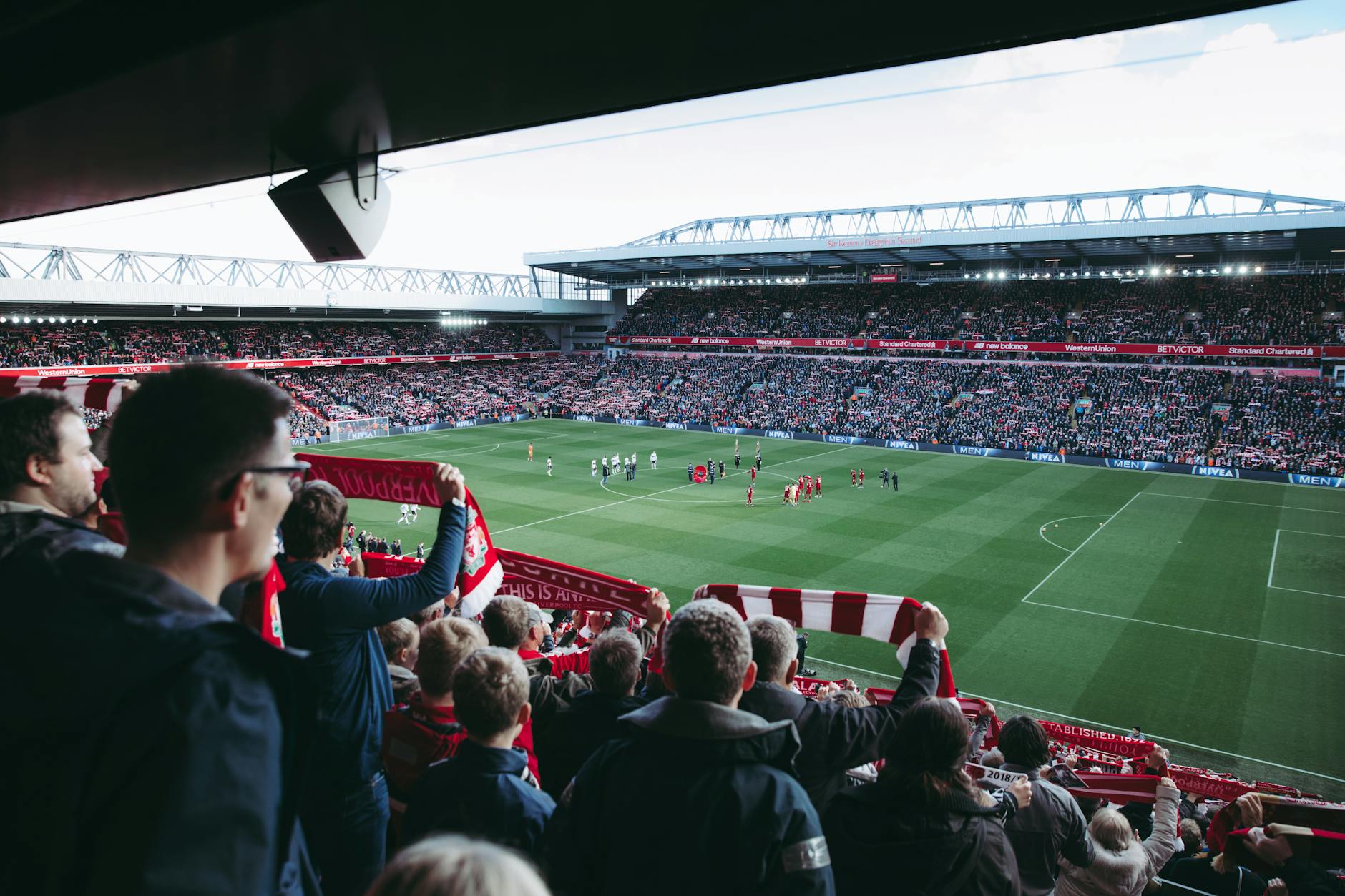
Photo by Tembela Bohle on Pexels
The 30-day check-in also helps distinguish genuine information from online noise. Search results may display the phrase “Premier League fixtures 2026” long before every relevant detail is official. Compare publication dates, follow the Premier League and club accounts, and use Fan Strategy for context around tactics, players, and tournament developments. The quality of the source matters more than the speed of the rumour.
For readers outside the United Kingdom, time zones deserve their own line item. A 3:00 p.m. UK kickoff may appear in a different local date or evening slot in North America, Asia, or Australia. Calendar subscriptions can convert times automatically, but daylight-saving transitions can still create confusion. Check the displayed time against the official match centre on the week of the game.
If you want a final planning reference, keep this [Internal Link: matchday preparation and responsible betting guide] close to your calendar.
What should you do after a fixture changes?
After a Premier League fixture changes, verify the new date through the league or club, then contact the ticket provider, transport operator, and accommodation provider using the updated information. Do not assume that a ticket, hotel, and train booking will all change automatically. Each supplier may apply different terms and deadlines.
The priority order is straightforward:
- Save the official postponement or rescheduling notice.
- Confirm whether the ticket remains valid.
- Check the club’s refund or exchange policy.
- Rebook transport only after the new kickoff is official.
- Review accommodation cancellation terms.
- Update calendar alerts and any fantasy football notes.
The same process applies to match analysis. Refresh injuries, predicted lineups, rest days, and betting odds after the change. A fixture moved by 48 hours can alter expected rotation, particularly for clubs involved in UEFA competition. Therefore, an old prediction should be labelled old rather than quietly presented as current.
The UK Government travel advice can help international visitors with broader travel preparation, although it will not provide club-specific stadium instructions. For stadium access, the home club remains the better source.
How can Fan Strategy help with Premier League fixtures 2026?
Fan Strategy can help readers interpret Premier League fixtures 2026 through match predictions, tactical analysis, player statistics, and wider 2026 FIFA World Cup coverage. It is a football-focused content resource rather than an official fixture issuer, ticket seller, or guarantee of betting outcomes. Readers should combine its analysis with current Premier League, club, and competition information.
That distinction is important. A good content site can explain why a schedule matters: pressing intensity after short rest, a winger’s minutes management, or how a formation may change against a low block. It cannot confirm a rescheduled kickoff unless the relevant authority has published it. The strongest workflow is therefore:
- Use the Premier League for the fixture.
- Use the club for tickets and stadium access.
- Use broadcasters for live selections.
- Use UEFA and the FA for competition conflicts.
- Use Fan Strategy for analysis and context.
That is a rather less glamorous system than trusting one magical app. It is also much more reliable, believe it or not — I do.
Review the latest football insights before finalising your calendar.
Frequently Asked Questions
Q: What are the Premier League fixtures 2026?
A: The phrase generally refers to the 2026–27 Premier League schedule, covering 20 clubs and 380 league matches from August 2026 to May 2027. The initial fixture list is expected in June 2026, subject to the Premier League’s official announcement. Dates and opponents may be published before final kickoff times are selected for television. Always check the official Premier League fixture page before booking travel or making match-specific plans.
Q: When will the 2026–27 Premier League fixtures be released?
A: The full 2026–27 Premier League fixture list is expected to be released in June 2026. The release should show each club’s home and away opponents, but television selections and competition conflicts can later alter kickoff times. Arsenal, Liverpool, Manchester City, Manchester United, Chelsea, and Tottenham Hotspur fixtures often attract early attention. Treat the release as the starting point, not necessarily the final travel itinerary.
Q: How do you check a Premier League fixture after it changes?
A: Check the Premier League website first, then confirm the notice on the relevant club’s official website. Compare the new kickoff with the ticket provider, transport operator, broadcaster, and hotel booking. Save the official announcement and review refund or exchange terms immediately. If you are using the fixture for fantasy football or betting analysis, refresh injuries, rest days, predicted lineups, and odds after the change.
Q: What is the difference between Premier League fixtures and broadcast fixtures?
A: A Premier League fixture is the scheduled league match, while a broadcast fixture has a confirmed television date and kickoff time. The initial list may show a Saturday match that later moves to Sunday or Monday after broadcasters make their selections. This is why travel should not be booked solely from an early calendar. The club and Premier League match centre provide the most dependable confirmation.
Q: Can the 2026 FIFA World Cup affect Premier League fixtures?
A: The 2026 FIFA World Cup may affect player workloads, preseason planning, international availability, and the wider football calendar, but it does not automatically postpone every Premier League match. The tournament is hosted by the United States, Canada, and Mexico and forms a major summer football event. Supporters should monitor FIFA, Premier League, UEFA, and club announcements for practical effects rather than assuming a blanket change.
Q: Are Premier League fixture calendars free?
A: Official Premier League fixture information is generally available free through the league and club websites, while calendar subscriptions and broadcaster services may have different terms. Free fixture lists do not include match tickets, travel, hospitality, or guaranteed live coverage. Check whether a calendar automatically updates postponed matches before relying on it. For ticket purchases, use the club or an authorised seller rather than an unofficial free listing.
Q: Is it sensible to bet on a Premier League match immediately after fixtures are released?
A: Immediate betting is usually less informed because lineups, injuries, television changes, and fixture congestion may remain unclear. A newly released schedule can reveal rest patterns, but the relevant evidence develops closer to kickoff. Review official team news, European commitments, home-and-away form, and responsible gambling limits before making any decision. Fan Strategy can add tactical context, but no prediction guarantees a result or profit.
The Premier League fixture list is useful from the moment it appears, but its value improves as the surrounding details become confirmed. Keep the official schedule, club notices, broadcast updates, and travel terms in one place. Then use Fan Strategy for the deeper questions: who benefits tactically, which players face the heaviest workload, and how the 2026 football calendar changes the picture.
Ready to keep your 2026 football planning current?