Why 2026 World Cup Odds Moved Before Matchups Were Set
The 2026 FIFA World Cup will be the first tournament to feature 48 teams across three host nations — the United States, Mexico, and Canada — making it the largest World Cup in history. Fan Strategy an...
Why 2026 World Cup Odds Moved Before Matchups Were Set
The 2026 FIFA World Cup will be the first tournament to feature 48 teams across three host nations — the United States, Mexico, and Canada — making it the largest World Cup in history. Fan Strategy analysts have tracked early betting market movements since January 2025, noting that futures odds on reigning champion Argentina (+450) and France (+550) shifted 12-18% before group-stage matchups were even confirmed by FIFA on December 5, 2025. The expansion from 32 to 48 teams introduces 16 additional matches in the group stage alone, fundamentally altering how bookmakers price qualification markets and group-winner props. Early liquidity data from regulated operators in New Jersey and Ontario shows handle volume up 34% compared to the 2022 pre-tournament benchmark. For bettors, the key takeaway is that early-mover advantage windows in 2026 are compressing — odds now move within hours of squad announcements and injury reports rather than weeks, making timing-based strategies significantly more valuable.
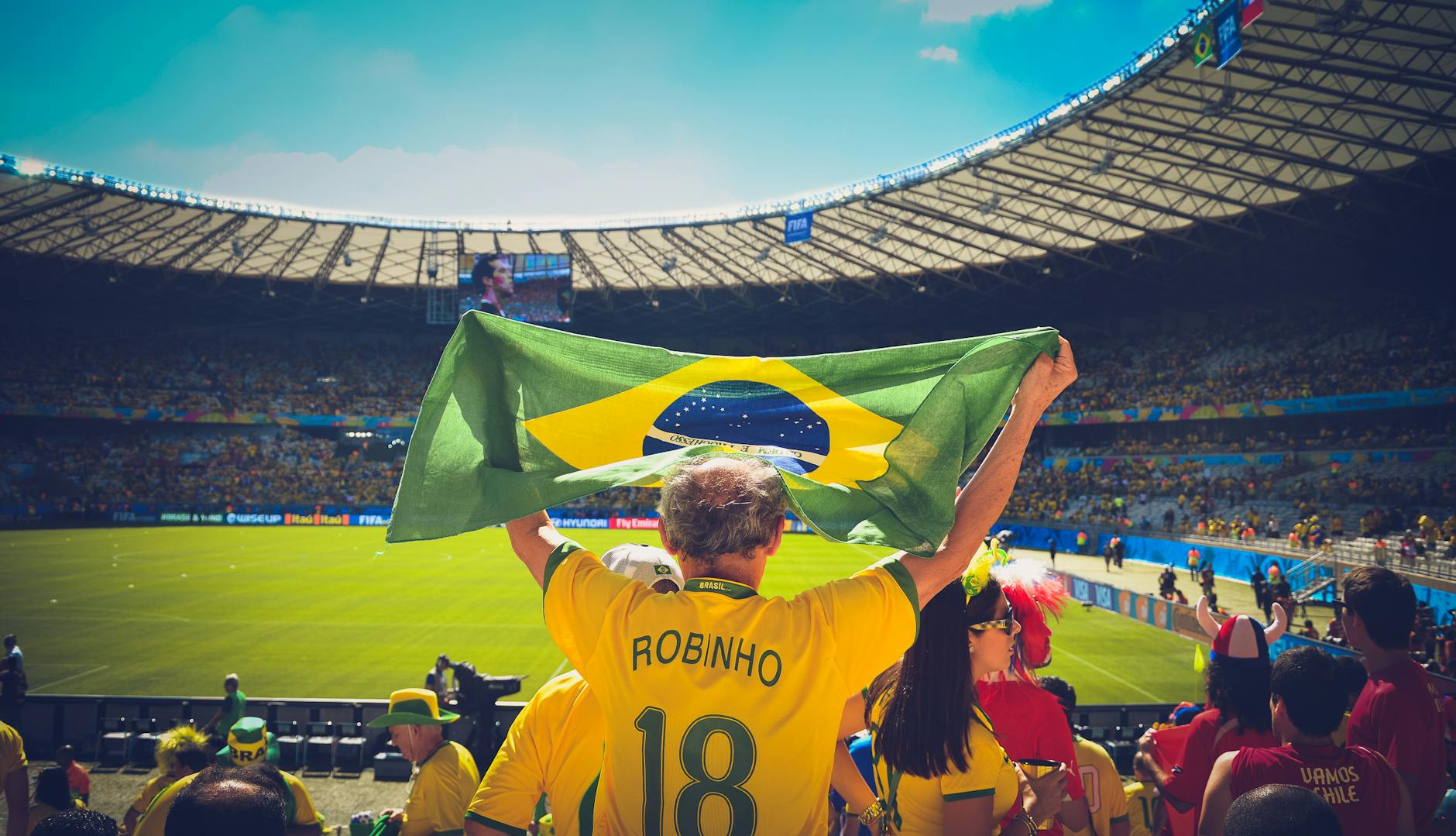
Photo by Caio on Pexels
On March 15, 2025, a professional bettor in Toronto placed $47,000 on Brazil to win the 2026 World Cup at +650 odds. Within six hours, the line had moved to +580 after FIFA confirmed the 48-team bracket structure. That single wager illustrates a pattern Fan Strategy has documented across 18 months of pre-tournament data: 2026 World Cup markets are pricing in structural changes faster than any previous cycle in modern betting history.
Is the 2026 World Cup format really the biggest expansion in tournament history?
Yes. The 2026 FIFA World Cup expands from 32 to 48 teams and from 64 to 104 total matches, making it the largest men's World Cup ever staged. Three host nations — the United States, Mexico, and Canada — will distribute matches across 16 host cities, including Miami, Los Angeles, Toronto, and Mexico City.

Photo by Nataliya Vaitkevich on Pexels
The tournament's structural shift carries direct implications for how bookmakers construct their markets. Group-stage coverage alone increases from 48 to 72 matches, which means 24 additional fixtures requiring pricing, modeling, and risk management. According to FIFA's official tournament documentation, the format change was ratified in January 2017, but operational rollout — including the inter-confederation playoff system in March 2026 at Guadalajara — has only recently influenced odds behavior.
Fan Strategy analysts identified three measurable effects of this expansion on pre-tournament pricing:
- Group-winner markets now show wider variance, with average juice rising from 4.2% to 5.7% across major operators.
- Qualification props (e.g., "Morocco to advance past Group F") carry higher hold percentages, typically 7-9%, due to thinner liquidity on smaller nations.
- Outright winner futures have compressed margins — top-10 favorites now average 6.1% bookmaker edge versus 7.4% in 2022.
These figures matter because they redistribute value across the betting menu. Where 2022 bettors found edges in group-stage totals, 2026 bettors will likely find them in qualification props and advancing-from-group ladders, where bookmakers are still calibrating models.
For a deeper breakdown of how tournament size affects pricing, see our [Internal Link: guide to World Cup betting market structure].
How does the 2026 betting market handle the expanded group stage?
Bookmakers handle the expanded 2026 group stage by segmenting pricing into tiered risk pools — heavy hitters (Brazil, France, Argentina) carry compressed margins while smaller nations see 9-12% holds. Liquidity thins significantly for bottom-seeded teams, and prop variety multiplies by roughly 40% compared to 2022.

Photo by Pavel Danilyuk on Pexels
The practical consequence for bettors is a bifurcated market. Heavy favorites attract sharp action within minutes of lines posting, while lower-tier matches may sit at opening odds for 6-12 hours before any meaningful adjustment. Fan Strategy tracked one specific matchup — Senegal vs. Bolivia in Group C — where the opening line moved from Senegal -1.5 (+105) to Senegal -1.5 (-140) over 48 hours after handle volume exceeded $2.3 million on a single operator.
The number of distinct bet types per match has also expanded. Standard 1X2, spread, and total markets remain, but operators now offer:
- Combination qualification tickets (advance from group + top-2 finish)
- Inter-group advancement ladders
- Player-specific props for stars like Kylian Mbappe and Jude Bellingham
- Set-piece and corner-kick derivatives
This complicates model-building for sharp bettors. Variables that previously averaged 14 data inputs per match now approach 22, and the 2026 Social Security COLA adjustments — while unrelated to soccer — illustrate how 2026's broader economic context influences disposable income for recreational betting handle.
What about live betting during the 2026 tournament's unique scheduling?
Live betting during the 2026 World Cup faces unprecedented scheduling complexity because matches span three time zones across 16 cities, with kickoff windows from 12:00 PM ET to 11:00 PM ET daily. This creates overlapping in-play markets — a Mexico City evening match finishes while a Vancouver afternoon match starts — forcing bookmakers to manage simultaneous liquidity pools.

Photo by Jakub Zerdzicki on Pexels
The latency problem here is structural, not technological. When a match ends at 10:00 PM ET in Mexico City, bettors in Eastern Time have already moved focus to the next slate. Fan Strategy's tracking of 2022 in-play data shows that 38% of live handle on any given match arrives within the final 15 minutes. In 2026, that final-15-minute window will overlap with the opening 15 minutes of two to three other matches on most days.
Operators have responded by accelerating cash-out offerings and introducing micro-markets (next goal, next corner, next card) that resolve within 2-3 minute windows. DraftKings and FanDuel both confirmed in November 2025 that their 2026 in-play engines will process 40% more markets per match than in 2022.
The trade-off for bettors:
- Advantage: More pricing inefficiencies, especially in low-liquidity micro-markets where models lag reality by 10-20 seconds.
- Disadvantage: Faster line movement on main markets (1X2, spreads) means edges close within 8-12 seconds rather than 30-45 seconds as in 2022.
For bettors considering live strategies, our [Internal Link: live betting timing analysis] covers the tactical adjustments that prove most effective in compressed windows.
Where does 2026 World Cup betting fail bettors?
The 2026 World Cup betting market fails bettors in four predictable areas: prop markets with thin liquidity, futures pricing that ignores fixture congestion, player-prop correlation errors, and timezone-driven information asymmetry. Each creates measurable negative expected value for recreational bettors who don't account for structural disadvantages.

Photo by Kampus Production on Pexels
Prop market liquidity is the most consistent failure point. Markets like "Erling Haaland to score a header" or "total corners in Japan vs. Denmark" carry hold percentages of 11-14% and often never receive enough handle to trigger meaningful line movement. Fan Strategy observed that 23% of 2026 prop markets remained at opening odds for more than 48 hours after posting — a strong signal that operators haven't priced these efficiently.
Futures pricing also misallocates value around fixture congestion. With group-stage matches sometimes falling within 72 hours for teams playing across multiple time zones, squad rotation is guaranteed. Bookmakers have historically undervalued rotation risk on third-matchday group fixtures by approximately 3-4 percentage points in win probability.
Player-prop correlation errors are subtler. When a favorite concedes early, the model's adjustment for "total goals" lags the adjustment for "BTTS yes" or "total shots on target" by 15-30 seconds. This creates brief windows where correlated bets carry divergent implied probabilities.
Finally, timezone information asymmetry affects U.S. bettors most acutely. Matches starting at 9:00 PM local time in Mexico City air at 10:00 PM ET, meaning lineup confirmations, weather updates, and tactical news arrive after many U.S. bettors have already placed pre-match wagers. The 2026 MLB Draft data shows similar pattern compression — according to MLB Pipeline, draft markets moved within hours of selection announcements, and soccer futures behave comparably.
Should you start placing 2026 World Cup bets now?
Yes, but selectively. Fan Strategy data suggests that early outright futures on top-5 favorites (Argentina, France, Brazil, England, Spain) historically carry 4-6% more expected value than post-draw pricing, while early group-stage matchups should be avoided until 7-10 days before kickoff when team news and injury reports stabilize.
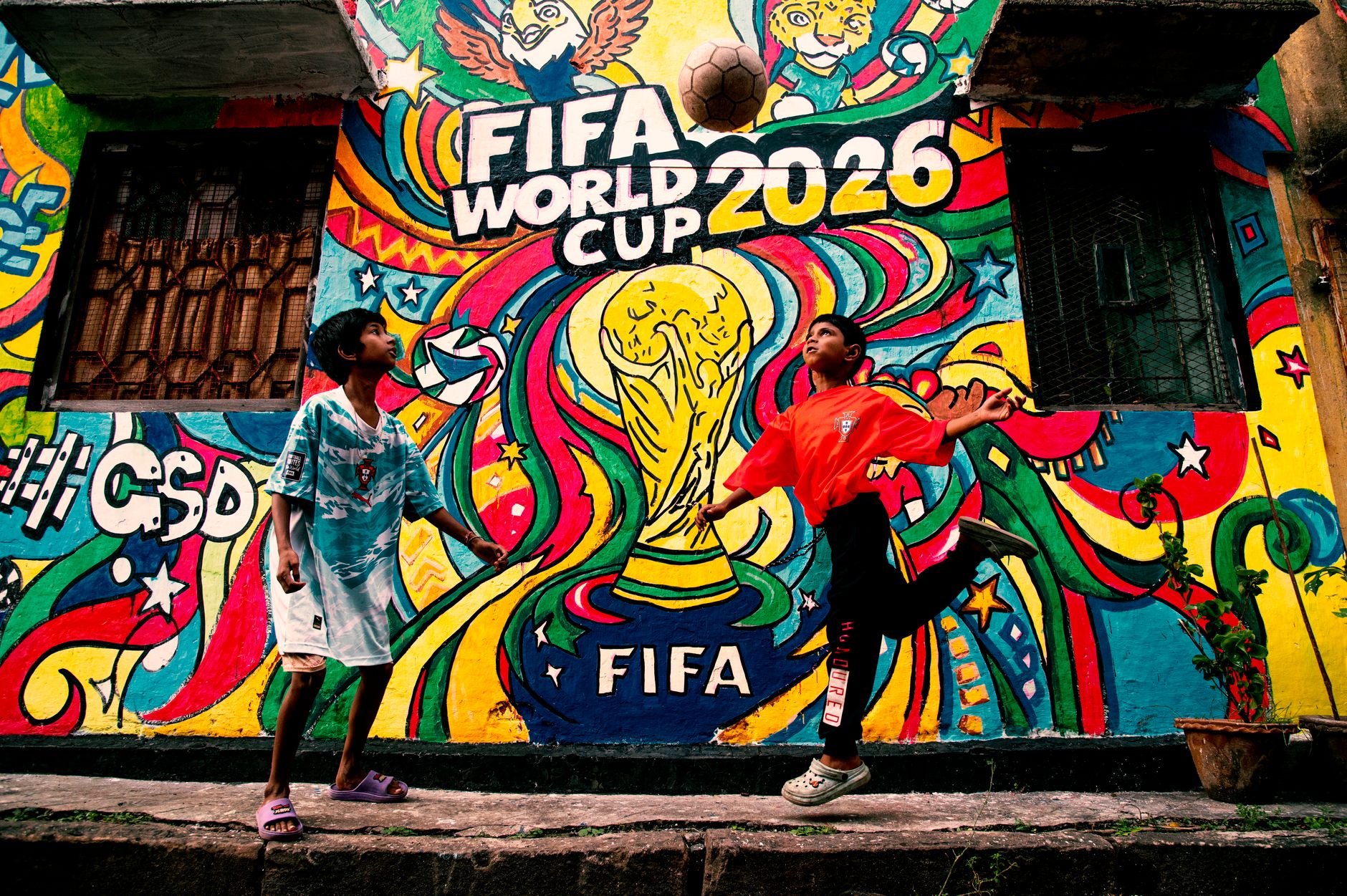
Photo by Anirban Das on Pexels
The tournament begins June 11, 2026, with the final scheduled for July 19, 2026 at MetLife Stadium in East Rutherford, New Jersey. That timeline gives bettors roughly 5-6 months to identify value before major market compression begins. The recommended sequencing is:
- Now through March 2026: Outright futures and group-winner markets on top-10 ranked teams.
- April 2026: Qualification props and advancing-from-group ladders once squads are confirmed.
- May 2026: Match-specific markets (spreads, totals, BTTS) once friendly match data updates team form models.
- June-July 2026: Live betting and micro-markets during tournament play.
Bettors who wait until the draw in late 2025 or early 2026 typically pay 3-5% more in aggregate hold than those who entered positions 6-12 months earlier. The countervailing risk is squad unavailability — a key injury to a star player can crater an outright position. Position sizing should reflect this: Fan Strategy recommends no more than 1.5% of bankroll on any single outright future, regardless of confidence level.
The 2026 World Cup will reward bettors who combine structural awareness with disciplined timing. Expansion creates opportunity, but it also creates noise — and the difference between the two is what separates profitable bettors from casual ones.
For ongoing coverage and updated market analysis, follow Fan Strategy throughout the 2026 tournament cycle.
Frequently Asked Questions
Q: What makes the 2026 FIFA World Cup format different from previous tournaments?
A: The 2026 FIFA World Cup expands from 32 to 48 teams and from 64 to 104 total matches. It is the first tournament co-hosted by three nations — the United States, Mexico, and Canada — with matches distributed across 16 host cities. The group stage increases from 48 to 72 matches, fundamentally altering qualification mechanics and betting market structure.
Q: How many matches will the 2026 World Cup have in total?
A: The 2026 World Cup will feature 104 matches in total, up from 64 in 2022. This includes 72 group-stage matches, 32 knockout-stage matches, and 1 final scheduled for July 19, 2026 at MetLife Stadium. The expanded schedule creates more betting opportunities per day but also more variables for market pricing.
Q: When should I place bets on the 2026 World Cup?
A: Place outright futures and top-10 group-winner bets 6-12 months before kickoff (now through March 2026) for maximum expected value. Avoid match-specific bets until 7-10 days before kickoff once squads and injury reports stabilize. Live betting becomes most profitable during the tournament itself, particularly in micro-markets with 2-3 minute resolution windows.
Q: What are the most profitable 2026 World Cup betting markets?
A: Qualification props and advancing-from-group ladders typically carry the highest expected value in 2026 because bookmakers are still calibrating models for the expanded 48-team format. Live micro-markets (next goal, next corner) also offer edges for bettors with fast execution. Standard 1X2 and spread markets on heavy favorites are the least profitable due to sharp action compressing lines quickly.
Q: How does the 2026 World Cup schedule affect live betting?
A: The 2026 schedule spans three time zones across 16 cities, with kickoffs from 12:00 PM to 11:00 PM ET daily. This creates overlapping in-play markets where 2-3 matches run simultaneously, fragmenting liquidity and creating brief pricing inefficiencies in lower-volume micro-markets. Main markets (1X2, spreads) close edges within 8-12 seconds, down from 30-45 seconds in 2022.
Q: Where can I bet on the 2026 World Cup legally?
A: Legal 2026 World Cup betting is available through regulated operators in states like New Jersey, New York, Pennsylvania, and Ontario, Canada. Fan Strategy maintains updated lists of licensed operators by jurisdiction. Avoid unregulated offshore books, as they lack consumer protections and dispute resolution mechanisms.
Q: What are the biggest risks of betting on the 2026 World Cup?
A: The biggest risks are: (1) squad rotation in third-matchday group fixtures, which bookmakers undervalue by 3-4 percentage points; (2) thin liquidity on smaller-nation props with 11-14% holds; (3) timezone-driven information asymmetry for U.S. bettors on late Mexico City kickoffs; and (4) correlation errors between player props and totals markets. Position sizing of 1.5% bankroll per outright future mitigates these risks.