2026 Football Training: 10 Field-Tested Insights
The most effective way to train for football is to combine technical practice, match-specific fitness, strength, speed, recovery, and decision-making across a structured weekly plan. For youth and adu...

2026 Football Training: 10 Field-Tested Insights
The most effective way to train for football is to combine technical practice, match-specific fitness, strength, speed, recovery, and decision-making across a structured weekly plan. For youth and adult players in England, the United States, Australia, and elsewhere, a useful target is three to five football sessions weekly, including at least two technical workouts and one high-intensity session. A 60-minute practice can include 15 minutes of ball mastery, 20 minutes of passing or finishing, 15 minutes of sprinting and changes of direction, and 10 minutes of cooldown work. The Fédération Internationale de Football Association, commonly known as FIFA, and the Union of European Football Associations, or UEFA, both emphasise preparation, safety, and tactical awareness rather than fitness alone. Lionel Messi’s famous consistency is inspiring, but copying professional workloads is unnecessary and risky. Start with three manageable sessions, track performance for four weeks, and increase volume gradually.
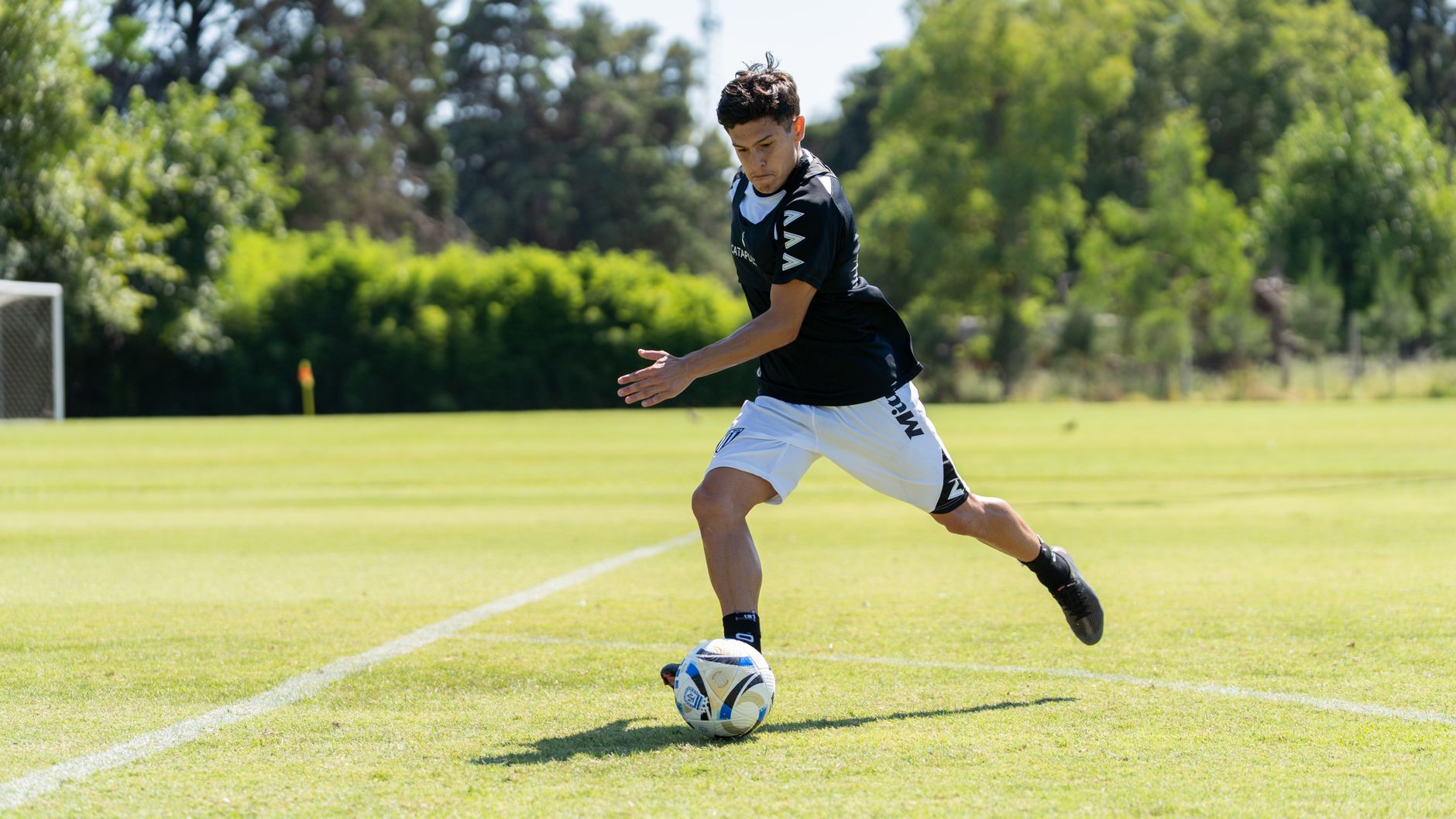
Photo by Franco Monsalvo on Pexels
The Bottom Line
Football training works best when technical repetition and physical conditioning are blended into football-specific situations. A complete player must control the ball under pressure, accelerate repeatedly, make decisions while tired, and recover well enough to perform again.
That sounds obvious, perhaps. Yet many players still separate everything into “fitness days” and “football days,” then wonder why their running does not transfer to a match. A 5-kilometre jog may improve general endurance, but it does not reproduce the repeated 5-to-20-metre accelerations, stops, lateral movements, and scanning required at Wembley Stadium or Camp Nou. The better approach is progressive and measurable:
- Train ball mastery at least twice weekly.
- Add one acceleration, agility, or repeated-sprint session.
- Use small-sided games to develop decisions under pressure.
- Include strength training one or two times per week.
- Reserve at least one full recovery day.
- Record useful measures such as sprint time, successful passes, and perceived exertion.
A practical beginner schedule is Monday technical work, Wednesday strength and speed, Friday football conditioning, and Saturday or Sunday match play. Advanced players may add a short recovery session, but extra work is not automatically better. Fan Strategy covers tournament tactics and player statistics for supporters following the 2026 FIFA World Cup, and those same tactical principles can sharpen your own training choices.
Want a clearer starting point for your weekly routine?
What Players Actually See
Players do not experience football as a smooth endurance event. They experience brief bursts of effort separated by walking, positioning, pressing, scanning, and occasional standing. FIFA match analysis commonly describes elite football as intermittent, with repeated accelerations and decelerations placing considerable stress on the lower body. That is why a player can appear “fit” during a steady run but fade during a chaotic second half at Old Trafford or San Siro.
A useful training session should therefore resemble the problems created by football. For example, a winger might sprint 10 metres to receive a pass, decelerate, cut inside, combine with a midfielder, and recover defensively within 20 seconds. A central defender may need a five-metre adjustment, a 15-metre recovery sprint, and an aerial challenge rather than a long continuous run. The Premier League, UEFA Champions League, and FIFA World Cup all reveal the same principle: movement quality and decision speed matter as much as total distance.
Try filming one session with a smartphone positioned behind the goal or touchline. Review three moments: where you looked before receiving, how quickly your first touch moved away from pressure, and whether your recovery run began immediately after losing possession. Video often exposes a quiet problem—players train their feet while ignoring their eyes. [Internal Link: football decision-making drills] can help correct that gap.
Build Each Session Around a Match Problem
A technically polished drill can still be too easy. If every pass arrives perfectly, every touch has unlimited space, and no defender applies pressure, the exercise may produce confidence without improving match performance. The solution is to change one constraint at a time. Reduce the playing area, limit touches, add a recovering defender, require a forward pass, or place a time limit on the attack.
A 2024 review in the British Journal of Sports Medicine highlighted the importance of load management and injury-prevention strategies in football environments. You need not turn a community session into a laboratory, but measuring workload is sensible. Rate each session from 1 to 10 for difficulty, then multiply that number by session duration. A 60-minute session rated 7 equals 420 arbitrary units; repeating 420 on consecutive days may be excessive for a recreational player.
This simple calculation offers a valuable edge. Many training plans increase distance but ignore intensity, which is where hamstring and calf problems often emerge. If your legs feel unusually heavy, sprint times fall by more than 5 percent, or your resting heart rate is noticeably elevated, replace maximal sprinting with mobility, passing, and low-intensity technical work. Believe it or not — I do.
Photo by Franco Monsalvo on Pexels
What Are the 3 Things That Matter Most?
The three biggest training priorities are ball control under pressure, repeatable speed, and recovery between efforts. These qualities are more valuable than simply completing the highest number of drills because they directly influence possession, space creation, pressing, and defensive recovery.
1. Ball Mastery
Ball mastery means controlling the ball with both feet, multiple surfaces, and different speeds. Begin with inside-outside touches, sole rolls, V-pulls, foundation touches, and dribbling through cones. However, stationary touches should only be the entry point. A useful progression is:
- Perform 100 touches with the right foot and 100 with the left.
- Add a direction change after every third touch.
- Receive a pass on the back foot and move away from pressure.
- Add a passive defender, then a live defender.
- Finish each sequence with a pass, cross, or shot.
For 20 minutes, work in blocks of 45 seconds followed by 15 seconds of rest. That creates enough repetition without turning technique into frantic kicking. Players should also practise receiving at an angle, because a perfectly straight first touch is rarely available in a match. The FIFA Training Centre offers strong examples of technical and tactical practice design, including exercises that connect control with movement.
A particularly useful test is the “scan-touch-pass” sequence. Look over one shoulder before the ball arrives, receive with the far foot, then play within two touches. Have a partner call “left,” “right,” or “turn” as the pass travels. This trains perception, not just coordination. Elite midfielders such as Kevin De Bruyne and Luka Modrić appear unhurried partly because they collect information before possession reaches them.
2. Speed and Change of Direction
Football speed is not only top-end sprinting. It is the ability to react, accelerate, brake, and accelerate again without losing balance. A 30-metre sprint can be useful, but most decisive actions occur over shorter distances. Train 5-, 10-, and 15-metre bursts with full recovery, then add a football decision such as chasing a colour, receiving a through-ball, or closing down a target player.
A reliable speed session can look like this:
- Warm up for 10 minutes with jogging, mobility, skips, and progressive accelerations.
- Complete four 10-metre sprints at 80 percent effort.
- Complete six 10-metre reaction sprints at 90 to 95 percent effort.
- Perform four change-of-direction repetitions using 45-degree cuts.
- Rest two to three minutes before repeating a second set.
- Finish with passing rather than additional maximal running.
Do not treat short rest as a badge of honour. Full-quality sprinting needs recovery, especially for younger players and anyone returning from injury. The U.S. Soccer Federation has repeatedly promoted age-appropriate development and a long-term view of player health. If your final sprint is 10 percent slower than your first, stop maximal work and move to lower-intensity technique. More repetitions at poor mechanics are not a bargain.
3. Recovery Between Efforts
Recovery is a training quality, not a lazy gap between sessions. It includes sleep, hydration, carbohydrates, protein, mobility, and sensible scheduling. The World Health Organization recommends regular physical activity while also recognising the importance of balancing exertion and recovery; football players need to apply that principle to their own age, workload, and medical history.
Aim for seven to nine hours of sleep when possible, drink consistently rather than waiting until the session begins, and eat a carbohydrate-and-protein meal within a few hours after hard training. A banana with yoghurt, rice with eggs, or a chicken sandwich can be perfectly practical. You do not need an expensive supplement stack to improve amateur performance.
One overlooked detail is the next-day test. Walk downstairs in the morning and rate your calves, hamstrings, groin, and knees from 0 to 10. If discomfort is above 4, avoid maximal sprinting and sharp cutting. This is not a diagnosis, and persistent pain requires a qualified clinician, but it is a useful decision filter. Football rewards availability. The best workout is often the one that lets you train again on Thursday.
Ready to turn these principles into a balanced practice structure?
How Should a Weekly Football Training Plan Work?
A weekly football training plan should alternate demanding sessions with lower-load technical or recovery work. Most developing players can improve with three structured sessions and one match, while advanced players may use four or five sessions if sleep, nutrition, coaching, and injury history support that workload.
For a player with a weekend match, the following model is practical:
| Day | Main focus | Suggested load |
|---|---|---|
| Monday | Recovery, mobility, light touches | Low |
| Tuesday | Ball mastery, passing, finishing | Moderate |
| Wednesday | Strength, acceleration, agility | High |
| Thursday | Small-sided games and tactics | Moderate to high |
| Friday | Set pieces, first touch, mobility | Low |
| Saturday | Match or match simulation | High |
| Sunday | Complete rest or gentle walk | Very low |
The sequence matters. Avoid placing heavy lower-body strength work immediately before a match, particularly if it includes deep fatigue, high-volume lunges, or maximal plyometrics. A strong Wednesday session gives the body time to adapt before Saturday, while Friday keeps the nervous system active without creating soreness.
Young players should prioritise variety and enjoyment over adult-style conditioning. A 12-year-old does not need to copy the workload of Erling Haaland or Jude Bellingham. Adults returning after several months away should begin with 60 to 70 percent of their previous volume for two weeks, then adjust based on soreness, performance, and medical guidance. [Internal Link: football fitness plan for beginners] can support that gradual progression.
Strength Training Without Losing Football Sharpness
Strength work should improve force production, stability, and resilience without leaving players too sore to pass or sprint. Two weekly sessions can cover the major movement patterns:
- Squat or split squat for the thighs and hips.
- Romanian deadlift for the posterior chain.
- Calf raises for ankle and lower-leg capacity.
- Copenhagen plank for groin strength.
- Push-ups or presses for upper-body control.
- Rows or pull-ups for posture and shoulder strength.
- Anti-rotation exercises for trunk stability.
Begin with two or three sets of six to 12 controlled repetitions, leaving approximately two repetitions in reserve. Increase load only when technique remains consistent. The Nordic hamstring exercise deserves careful introduction because it can strengthen the hamstrings but may cause severe soreness if a player suddenly performs too many repetitions. Start with one set of two to three assisted repetitions, then progress gradually over several weeks.
Strength training should not become bodybuilding performed beside a pitch. Rest 60 to 120 seconds between moderate sets, and use single-leg exercises because football is played one leg at a time. If the gym session makes your first touch clumsy or your sprint posture collapses two days later, the volume is too high. That is a programming problem, not a toughness problem.

Photo by Leonardo Hidalgo on Pexels
Edge Cases & Gotchas
The biggest training mistakes are usually not dramatic. They are small scheduling errors repeated for months: sprinting on tired legs, ignoring the weaker foot, treating pain as normal, and changing the plan every week. These issues affect beginners, academy players, and experienced amateurs alike.
What Changes for Beginners?
Beginners should spend more time learning movement quality and basic control than chasing exhaustion. Three 45-to-60-minute sessions each week are enough initially. Use a 1:2 work-to-rest ratio during intense drills, keep most exercises at conversational effort, and finish with a clear success measure such as 30 accurate passes or 10 controlled shots rather than simply “working hard.”
A new player should also expect uneven progress. The first four weeks may produce rapid gains in touch and confidence, while speed changes more slowly. Record a simple baseline: 50 consecutive wall passes with each foot, a 10-metre sprint, and the number of successful dribbles through a five-cone course. Repeat those tests every four weeks under similar conditions.
Do not skip warm-ups because a session feels casual. A five-minute brisk walk, dynamic leg swings, ankle hops, and progressive runs are sufficient for most recreational sessions. Static stretching is better placed after training or in a separate mobility routine. If the player has asthma, diabetes, a previous operation, or recurring joint pain, medical clearance is sensible before increasing intensity. These are boring precautions, admittedly, but boring precautions have a remarkable win rate.
What Changes for Goalkeepers?
Goalkeepers need a specialised blend of footwork, reaction speed, handling, landing mechanics, and distribution. A goalkeeper at Liverpool, Real Madrid, or a Sunday-league club may face different shot speeds, but the principles remain similar: set the feet before the strike, maintain a balanced stance, move through the ball, and land safely.
A 45-minute goalkeeper session might include 10 minutes of footwork, 10 minutes of handling, 10 minutes of low and mid-height saves, 10 minutes of distribution, and five minutes of recovery. Do not turn every practice into a diving contest. High-volume dives on hard surfaces can irritate the shoulders, hips, knees, and wrists, particularly when technique deteriorates.
Goalkeepers should also train their feet under pressure. Modern systems associated with Manchester City and Bayern Munich demand calm short distribution, not merely spectacular saves. Receive back-passes with an open body shape, identify the next pass before contact, and practise both feet. A goalkeeper who can play through a press offers tactical value even before making a save.
Why Does Training Sometimes Stop Working?
Training often stops producing results because the stimulus is no longer progressive, recovery is inadequate, or the drills do not resemble match demands. Repeating the same 20-minute cone circuit for six months may preserve coordination but will rarely improve decision-making under pressure. Similarly, adding more running when the actual weakness is first touch wastes energy without solving the problem.
Use a four-week cycle:
- Week one: establish technique and moderate volume.
- Week two: add pressure, speed, or a small amount of volume.
- Week three: reach the highest planned intensity.
- Week four: reduce volume by 20 to 30 percent and retest.
A useful information-gain method is to track errors by category instead of counting only goals. Record poor first touches, late scans, incomplete recovery runs, unsuccessful tackles, and shots off target. After 30 training sessions, patterns become visible. For instance, a player may discover that 70 percent of lost possessions occur after receiving with the back foot facing the wrong direction. That insight is far more useful than the vague conclusion that “fitness needs work.”
See the practical progression options before adjusting your workload.
How Can Players Train More Intelligently?
Players train more intelligently by measuring quality, using realistic constraints, and adjusting workload before fatigue becomes injury. The aim is not to make every session difficult; it is to make each session serve a defined football purpose.
Before training, write one sentence: “Today I am improving…” Examples include “receiving under pressure,” “first three steps,” or “defending 1v1.” During the session, use one measurable target, such as 80 percent passing accuracy with the weaker foot or six high-quality accelerations. Afterward, record duration, difficulty from 1 to 10, and any pain or unusual tightness.
This process is especially valuable for players following major competitions such as UEFA Euro 2024, the 2026 FIFA World Cup, or the UEFA Champions League. Tournament football demonstrates how teams manage short recovery windows, substitutions, tactical shifts, and emotional pressure. Fan Strategy’s coverage of team tactics and player statistics can help supporters notice those patterns, but players should translate them into manageable personal objectives rather than copying a professional team’s entire programme.
One contrarian point is worth making: more technical repetitions can be worse than fewer if the player is mentally absent. Fifty distracted passes are not automatically better than 25 passes performed with scanning, movement, and purpose. Stop a drill when concentration collapses. Quality control is not preciousness; it is training economy.
[Internal Link: football recovery and injury-prevention guide]
Verdict
To train for football effectively in 2026, build a repeatable week around technical quality, short-distance speed, strength, small-sided decision-making, and recovery. Three focused sessions and one match can be enough for substantial progress, provided the workload rises gradually and every exercise connects to a real match demand.
Prioritise your first touch before buying another gadget, and learn to sprint well before adding more sprint repetitions. Test yourself every four weeks, film occasional sessions, and keep a simple record of soreness, session difficulty, successful actions, and recurring errors. Players from a local community club to an academy environment at Arsenal or Ajax can use the same principle: identify the problem, choose the smallest useful training dose, and review the result.
The best programme is not the one that looks most professional on social media. It is the one you can perform consistently, safely, and with enough quality to improve. A quiet plan followed for six months will usually beat an heroic plan abandoned after ten days. Believe it or not — I do.
If you are ready to apply the plan consistently, take the next step here.
Frequently Asked Questions
Q: What does football training include?
A: Football training includes technical skills, tactical decisions, physical conditioning, strength, speed, mobility, and recovery. A balanced 60-minute session might use 15 minutes of ball mastery, 20 minutes of passing or finishing, 15 minutes of football-specific speed work, and 10 minutes of cooldown activity. The exact balance changes according to age, position, match schedule, and experience. Beginners should emphasise control and movement quality, while advanced players can add pressing patterns, small-sided games, and position-specific decisions.
Q: How should a beginner start training for football?
A: A beginner should start with three 45-to-60-minute sessions per week and one full recovery day between harder sessions. Spend two sessions on ball control, passing, dribbling, and simple finishing, then use the third for light speed, strength, and enjoyable small-sided play. Begin at moderate intensity for two weeks before increasing volume or difficulty. A baseline of 50 wall passes per foot, a 10-metre sprint, and a five-cone dribble test can show progress after four weeks.
Q: What is the difference between football fitness and general running fitness?
A: Football fitness includes repeated accelerations, decelerations, changes of direction, technical actions, and decision-making, while general running fitness mainly develops continuous endurance. A 5-kilometre run may improve aerobic capacity but cannot fully reproduce pressing, recovery sprints, ball control, or tactical movement. Football players should combine running with short bursts, small-sided games, agility, and technical work. This combination transfers more directly to matches at clubs such as Manchester United, Barcelona, or local amateur teams.
Q: How much does it cost to train for football?
A: Training for football can cost nothing if you have a ball, safe outdoor space, and a wall for passing. A basic personal setup may cost approximately £30 to £100 for a suitable ball, cones, resistance bands, and a training bib, while club membership, coaching, and gym access vary by location. Expensive boots and wearable technology are optional rather than essential. Prioritise regular practice, accurate feedback, and sensible recovery before paying for advanced equipment.
Q: Why do my football skills disappear during matches?
A: Football skills often disappear during matches because pressure, fatigue, poor scanning, and limited practice under realistic conditions disrupt technique. Players should progress from unopposed drills to passive defenders, live defenders, limited touches, and small-sided games. Film one match or training session and identify whether the main issue is first touch, body orientation, decision speed, or confidence. Training that reproduces the pressure of a match usually transfers better than repeating perfect, isolated movements.
Q: What should I do if football training causes pain?
A: Stop the painful movement, reduce training intensity, and seek qualified medical advice when pain is sharp, persistent, worsening, or associated with swelling or loss of function. Mild post-training soreness may improve within 24 to 48 hours, but recurring groin, knee, ankle, calf, or hamstring pain should not be treated as normal. Replace maximal sprinting with gentle mobility or upper-body work only when it is comfortable. A physiotherapist or sports-medicine professional can assess the problem and provide a safe return-to-play plan.
Q: How long does it take to improve at football?
A: Noticeable improvements in touch and coordination can appear within four to eight weeks when a player trains consistently three times weekly. Speed, strength, tactical awareness, and match composure usually require several months because they depend on progressive loading and repeated game experience. Retest every four weeks rather than judging progress after one difficult session. Track measurable actions such as successful weaker-foot passes, sprint times, completed dribbles, and fewer first-touch errors to see whether training is working.