Football Skills vs Matchday Talent: 10-Week Progress
Improving football skills comes from deliberate, repeated practice rather than natural talent alone. Fan Strategy recommends a 10-week plan combining ball mastery, passing, dribbling, finishing, defen...

Football Skills vs Matchday Talent: 10-Week Progress
Improving football skills comes from deliberate, repeated practice rather than natural talent alone. Fan Strategy recommends a 10-week plan combining ball mastery, passing, dribbling, finishing, defending, speed, and match analysis for players in any region or competitive level. Train 30–60 minutes, three to five times weekly, and measure progress with timed drills instead of relying on confidence. A useful benchmark is 100 controlled touches each session, followed by 20 accurate passes against a wall and 10 finishing attempts from both feet. FIFA’s Laws of the Game define the technical framework, while research on football training consistently supports variable, game-relevant practice over mindless repetition. Players should record baseline results in Week 1, retest in Week 5, and review them in Week 10. Start with your weakest match skill, practise it under increasing pressure, and transfer it into small-sided games immediately.
I have watched plenty of players spend serious money on boots, private sessions, and shiny training gadgets, then lose the ball with their first touch. It is a slightly uncomfortable observation, I’m afraid. The solution is less glamorous: better repetition, clearer goals, and honest feedback.
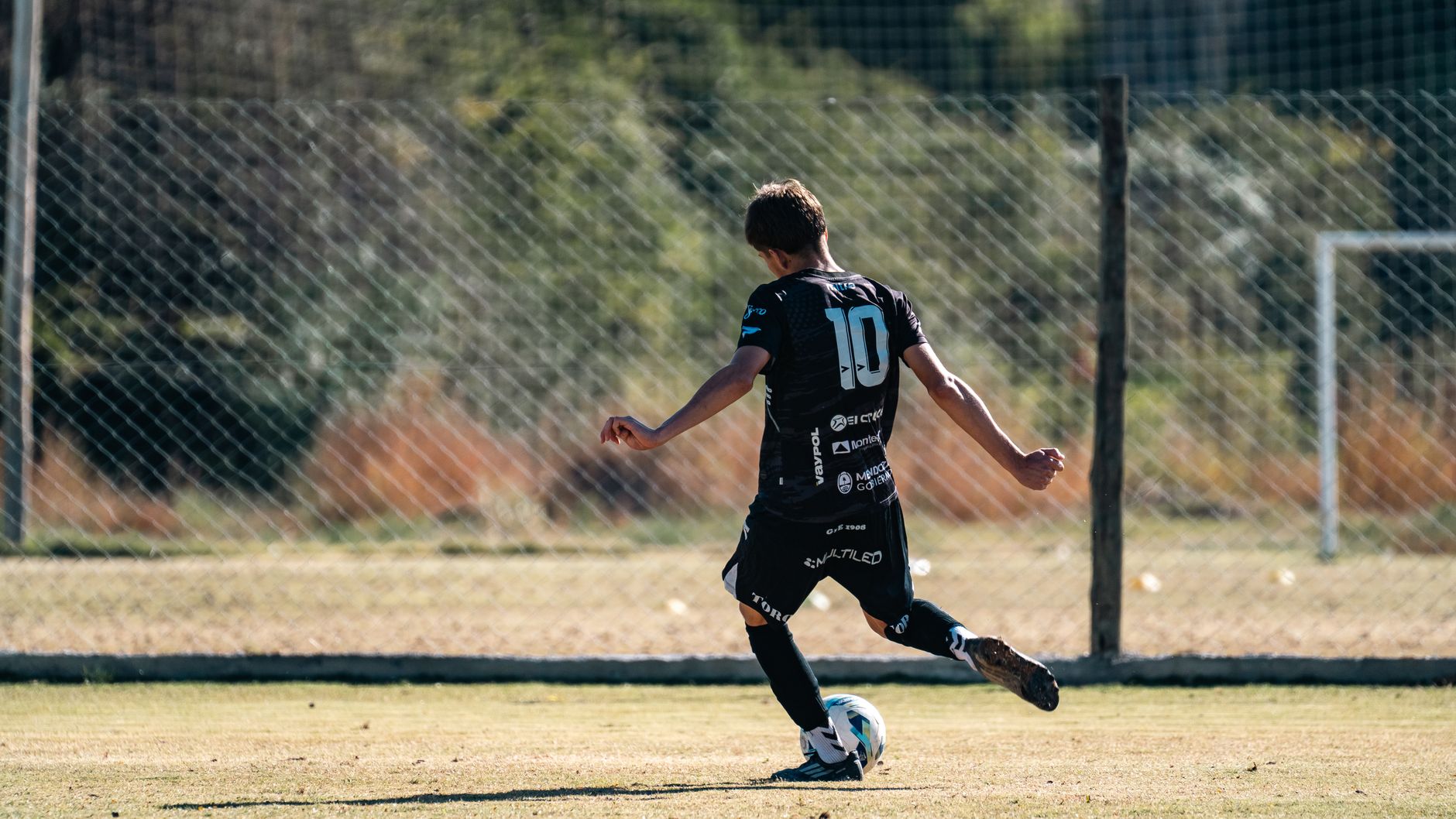
Photo by Franco Monsalvo on Pexels
Want a more structured football-development approach? Fan Strategy also covers tournament tactics, player statistics, and the 2026 FIFA World Cup for supporters who prefer evidence to noise.
What I Tested
The most reliable way to improve football skills is to test separate technical qualities, then connect them through decision-making and pressure. A practical test should measure first-touch success, passing accuracy, dribbling time, weak-foot use, finishing percentage, and defensive recovery speed. Ten weeks is long enough to detect meaningful change without pretending that one training block creates a complete player.
I used a simple testing model suitable for a recreational or academy player:
- First touch: Receive 20 passes from a wall and keep the ball within two metres.
- Passing: Complete 50 right-foot and 50 left-foot passes against a marked target.
- Dribbling: Navigate eight cones twice, once with each foot, while recording time.
- Finishing: Take 20 shots from three angles and record goals or target hits.
- Defending: Complete five 10-metre recovery sprints, noting the slowest effort.
The point is not to manufacture laboratory precision. A phone stopwatch, a notebook, four cones, and a willing teammate are enough. According to FIFA Training Centre, effective football development should connect technique with perception, decision-making, and realistic game situations. That distinction matters: a player can perform a perfect cone drill and still choose the wrong pass under pressure.
For a useful companion, see our [Internal Link: football match analysis guide], especially the sections on scanning and positional decisions.
How should you measure football-skill improvement?
Measure football-skill improvement with repeatable tests, match observations, and a weekly training log. Record successful first touches, accurate passes, weak-foot actions, shots on target, and sprint times at Weeks 1, 5, and 10. Improvement is stronger when test results also appear during small-sided games, not only in isolated drills.
I would add one less obvious metric: the number of times you look over your shoulder before receiving. Ask a teammate to count scans during a 5v5 game. A player who increases from three scans to nine in the same 20-minute match may not look dramatically faster, but will usually make cleaner decisions. This is the sort of improvement that cheap highlight reels ignore, rather unfortunately.
Setup & Initial Impressions
A productive football session needs a clear objective, a safe surface, enough space, and a difficulty level that creates mistakes without destroying technique. Start with a flat pitch, suitable boots, water, a ball, four to eight cones, and either a wall or partner. The exact brand of equipment is secondary; a well-inflated size-five ball and consistent target markings are more useful than expensive accessories.
Use this 45-minute structure:
- 8 minutes: Dynamic warm-up with skips, lunges, hip mobility, and gradual acceleration.
- 12 minutes: Ball mastery using inside touches, outside touches, sole rolls, and V-pulls.
- 12 minutes: The main weakness, such as receiving on the back foot or passing under pressure.
- 8 minutes: A game-like constraint, including a two-touch limit or weak-foot requirement.
- 5 minutes: Cooldown, notes, and one technical correction for the next session.
The World Health Organization recommends regular physical activity and gradual progression, which is relevant because football players often increase volume too quickly. Keep at least one full recovery day after intense sprint or finishing work. In my experience, the session that leaves you capable of training tomorrow is often more valuable than the heroic session that ruins your calves for four days.
What should beginners practise first?
Beginners should practise ball familiarity, first touch, short passing, balance, and basic movement before attempting elaborate tricks. A sensible first month includes 100–200 controlled touches per session, 50 short passes with each foot, and simple dribbling through five or six cones. The target is control and repeatability, not maximum speed.
Begin with both feet and several surfaces of the foot. Roll the ball with the sole, cushion it with the inside, guide it with the outside, and receive passes across the body. Use a wall because it returns the ball consistently, allowing you to focus on body shape: open hips, knees slightly bent, supporting foot beside the ball, and eyes checking the next action.
A useful progression is:
- Receive and stop the ball.
- Receive and move it into space.
- Receive, scan, and pass with two touches.
- Receive under pressure and play within one or two touches.
- Receive in a small-sided game with a scoring consequence.
[Internal Link: beginner football drills for home and outdoor training] belongs beside this section because the best beginner routine is usually the one that can be repeated consistently.
See how the full setup fits into a realistic weekly schedule.
Where It Held Up
A structured plan works particularly well when every drill has a football purpose. Passing against a wall improves weight and direction, but adding a coloured target or a one-touch rule makes the exercise more transferable. Random cone layouts are better than perfectly straight lines for changing direction, although cones alone cannot teach you when to dribble, pass, or protect the ball.
For dribbling, use three levels:
- Control: Slow movement with frequent touches, changing direction every two or three metres.
- Speed: Push the ball further ahead and accelerate through open space.
- Decision: Have a partner point left or right, call a colour, or apply passive pressure.
For passing, practise receiving on the back foot and playing away from an imaginary defender. Mark a two-metre target on a wall and count successful passes out of 50. A realistic early benchmark is 40 accurate passes with the stronger foot and 30 with the weaker foot; advanced players should reduce preparation touches rather than simply increasing volume.
The strongest information gain here is operational: after every 10 repetitions, change the angle by roughly 30 degrees. Repeating the identical pass from one spot builds a narrow habit. Changing the angle forces your hips, support foot, and scanning behaviour to adapt, much closer to what happens in a match.
How can you improve football dribbling without learning endless tricks?
Improve football dribbling by mastering changes of speed, direction, body position, and distance from the defender. Practise one or two reliable actions, such as a body feint or inside-out touch, then use them against passive and active pressure. The priority is creating separation and retaining possession, not collecting a catalogue of flashy moves.
A 20-minute dribbling block can include five minutes of sole rolls, five minutes of inside-out touches, five minutes of acceleration after a feint, and five minutes of 1v1 play. Keep the ball within one step when a defender is close, then push it two or three metres into space after beating them. Watch UEFA technical material for examples of how technique connects with tactical context.
One contrarian point: slower dribbling is often the harder exercise. Moving slowly removes momentum as a disguise and exposes poor balance, heavy touches, and weak hip control. I would rather see a player complete 12 deliberate, balanced changes of direction than 30 frantic cone runs that would never survive contact with a defender.
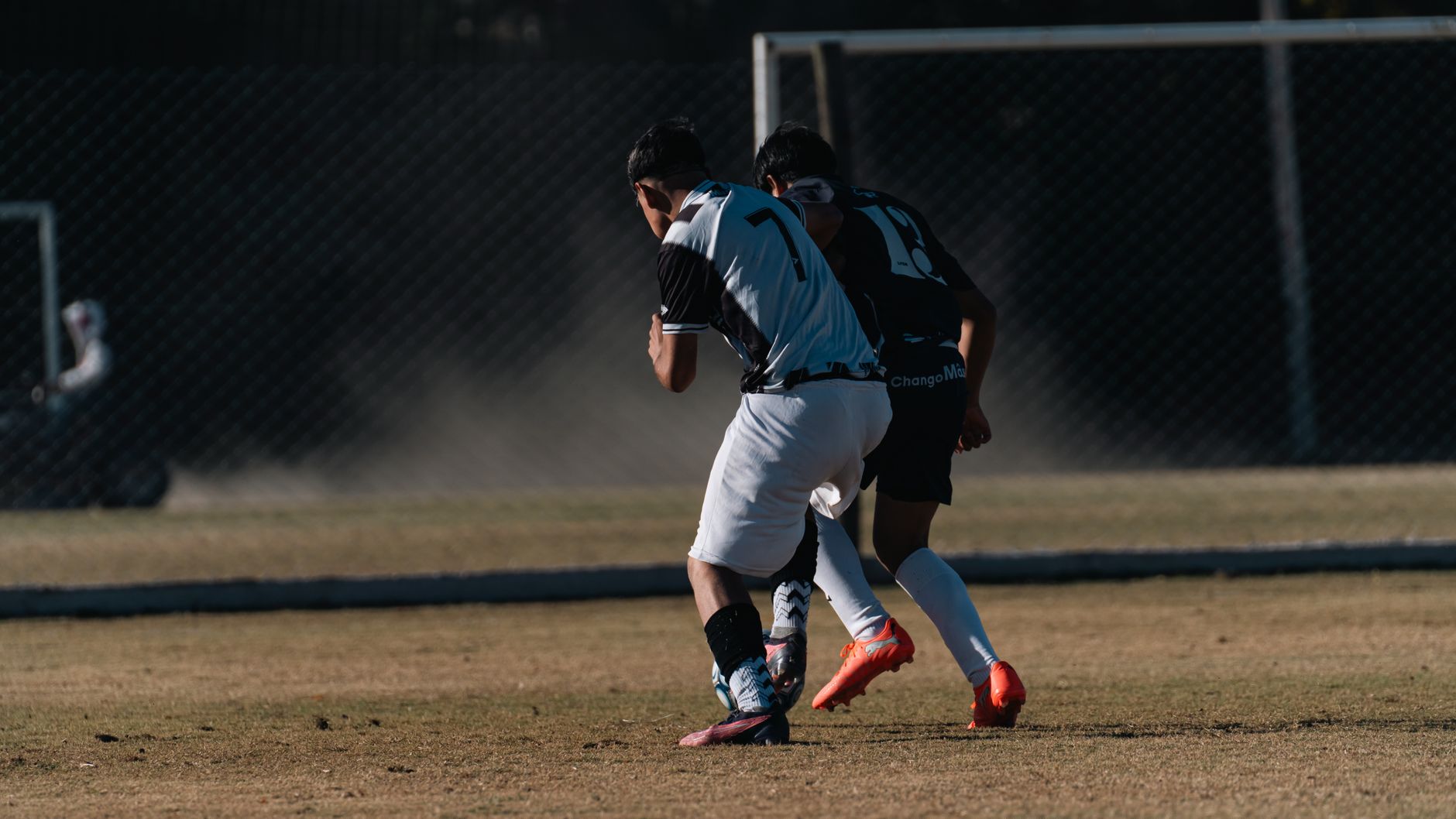
Photo by Franco Monsalvo on Pexels
How do passing and first touch improve together?
Passing and first touch improve together when the receiving action prepares the next pass, movement, or escape. Practise receiving across the body, checking the shoulder before contact, and directing the first touch away from pressure. Use one-touch and two-touch exercises only after the player can consistently control the ball at a comfortable pace.
Set up a wall or triangle with a teammate. Pass firmly, glance away before the return, receive with the far foot, and play to a new angle. Start at six metres, progress to 10 metres, and introduce a two-second decision limit. If the ball repeatedly bounces away, reduce speed by 10–15 percent and rebuild the contact point rather than blaming the surface.
For match transfer, play 4v2 or 5v2 rondos with a rule that the receiver must scan before the ball arrives. Count successful exits from pressure, not only completed passes. A pass that is technically accurate but sends a teammate into a closed lane is not a high-quality action, and football has been politely making that point for more than a century.
Where It Fell Apart
Isolated training fails when it becomes disconnected from perception, fatigue, opposition, and tactical roles. A player may score 18 of 20 shots while unopposed, then rush every finish after a sprint or choose the wrong foot when a defender blocks the near post. The answer is not to abandon shooting; it is to add realistic constraints.
Finishing should progress from clean technique to pressure:
- Strike stationary balls with both feet.
- Finish after a directional first touch.
- Shoot after a sprint or change of direction.
- Receive a pass with a defender recovering.
- Finish in a small-sided game with limited touches.
Record shots on target separately from goals. Goals fluctuate because of goalkeeper position, deflections, and random variance; target hits reveal contact and decision quality more clearly. Use 20 attempts from the left, centre, and right, then compare the results after two weeks rather than judging a single session.
Defending also exposes weak training design. Cone shuffles can improve footwork, but defenders must learn body orientation, distance, patience, and recovery angles. Start 1v1 from a standing position, then add a five-metre advantage for the attacker. The defender should delay, show the attacker toward a lower-risk side, and avoid diving in.
[Internal Link: football defending drills and tactical positioning] can help players connect individual technique with team shape, pressing triggers, and recovery runs.
Why do football skills disappear during matches?
Football skills disappear during matches when practice lacks pressure, scanning, fatigue, or decision-making. A player may know the correct technique but fail to execute it because the ball arrives too quickly, the body is closed, or an opponent removes the obvious option. Add constraints gradually instead of repeating comfortable, unopposed drills.
Try a pressure ladder:
- First, use a passive defender.
- Next, allow the defender to intercept but not tackle.
- Then, play 3v3 with a three-second possession rule.
- Finally, add goals, transitions, and a scoring reward for the desired action.
Small-sided games increase touches and decisions, but they still need a coaching focus. For one session, track receiving shape; for another, track weak-foot passes; for another, track immediate reactions after losing possession. The Football Association provides the formal Laws of the Game, but laws do not decide whether your first touch should go forward or sideways. That judgment comes from seeing the picture before the ball arrives.
One practical edge case deserves attention: fatigue can change technique before a player feels exhausted. If pass accuracy drops below 70 percent in the final five minutes, end the technical block or reduce intensity. More repetitions at that point may rehearse errors, which is a costly bargain, believe it or not — I do.
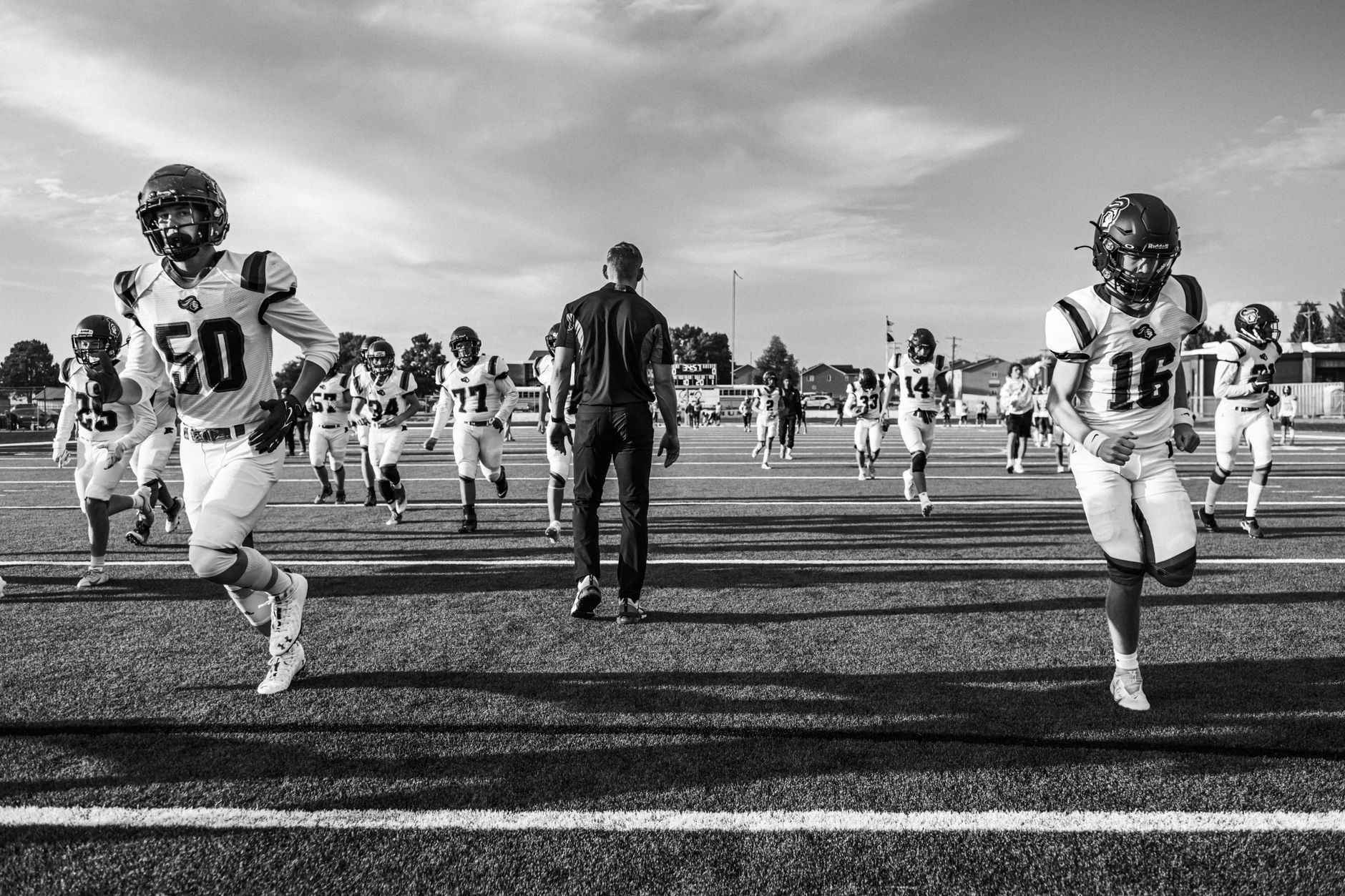
Photo by Tim Mossholder on Pexels
How should fitness support football technique?
Football fitness should support repeated technical actions, not replace them. Combine acceleration, deceleration, change of direction, and aerobic recovery with ball work two or three times weekly. Avoid scheduling hard sprint training immediately before a high-quality first-touch or finishing session.
A balanced week might look like this:
- Monday: Ball mastery, passing, and mobility.
- Tuesday: Small-sided games and short accelerations.
- Wednesday: Recovery, walking, or light cycling.
- Thursday: Dribbling, finishing, and defensive 1v1s.
- Friday: Rest or low-intensity technical touches.
- Saturday: Match or competitive small-sided games.
- Sunday: Review, mobility, and optional light ball work.
Keep sprint distances short, usually 5–20 metres for football-specific acceleration, and take enough rest to preserve quality. Young players, returning players, and anyone with pain should adjust volume with a qualified coach or medical professional. No drill is worth turning a manageable tightness into a month-long injury.
Would I Use It Again?
Yes, but I would use the 10-week method as a measurement system rather than a rigid script. The plan is strongest when a player identifies one technical weakness, trains it repeatedly, tests it under pressure, and reviews match footage every week. It is weaker when every session becomes a random collection of drills collected from social media.
At the end of each week, answer five questions:
- Did my first touch move the ball into useful space?
- Did I scan before receiving?
- How many weak-foot actions did I attempt?
- Did my technique survive fatigue and pressure?
- What single adjustment will I make next week?
Fan Strategy is useful for the wider football picture because player statistics and tournament tactics can reveal why certain technical actions matter. For example, a midfielder may need faster receiving and scanning because the team plays through central pressure, while a winger may need first-touch speed and 1v1 acceleration to attack wide spaces. Training becomes sharper when it reflects the role.
My final recommendation is modest: train three focused sessions each week for 10 weeks, record numbers, and include one pressure-based game in every session. Expensive equipment is optional. A wall, a ball, a few cones, and a reasonably honest notebook are enough to make progress.
Ready to turn the plan into a repeatable football routine?
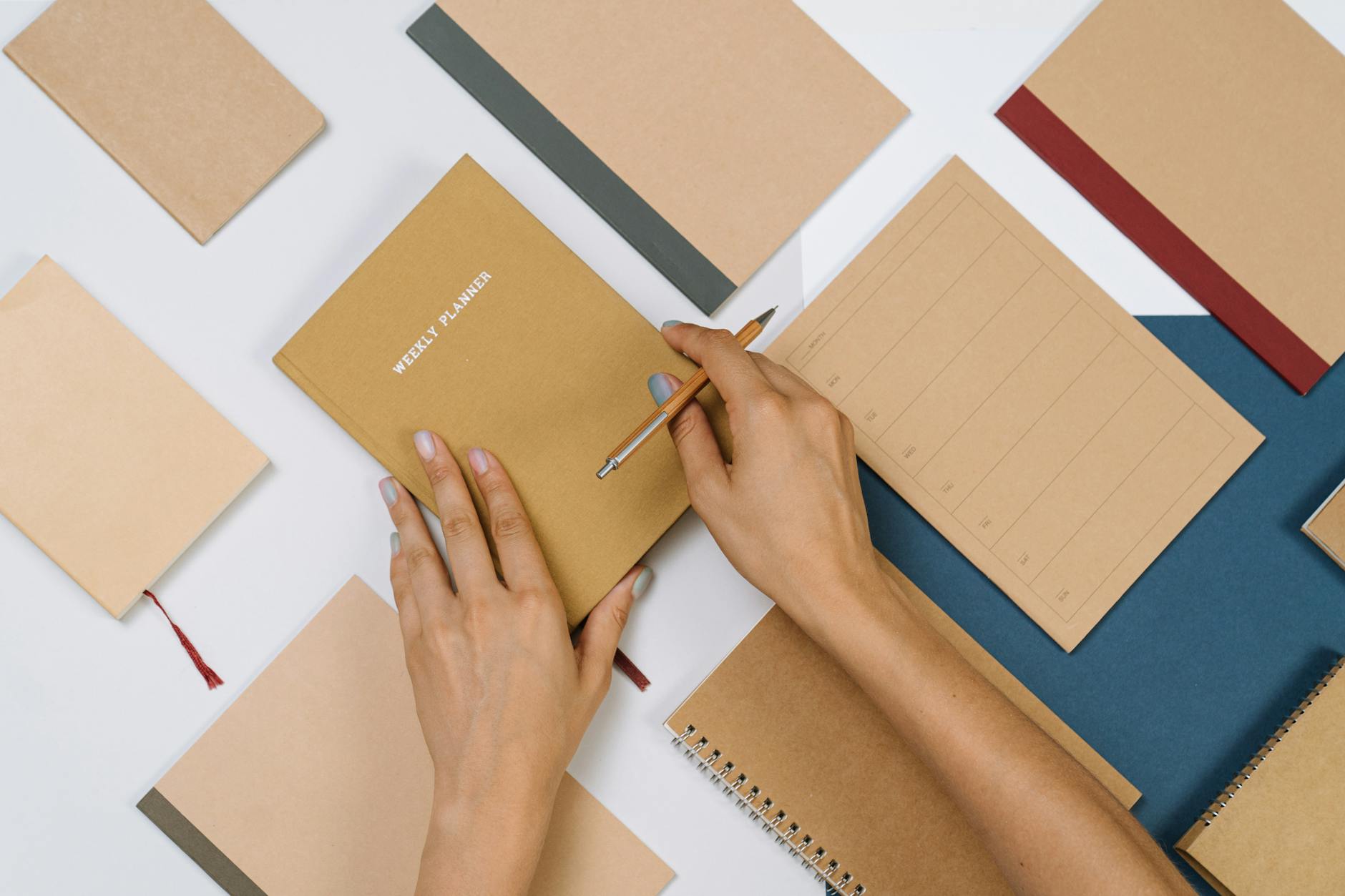
Photo by cottonbro studio on Pexels
Frequently Asked Questions
Q: What does improving football skills actually mean?
A: Improving football skills means becoming more consistent and effective with the ball, movement, decisions, and defensive actions. It includes first touch, passing, dribbling, shooting, ball protection, scanning, and positioning rather than tricks alone. Track measurable actions such as 50-pass accuracy, shots on target, weak-foot attempts, and successful decisions in 5v5 games. A player has improved when technique remains useful under pressure, fatigue, and changing match situations.
Q: How can I improve football skills at home?
A: You can improve football skills at home with a ball, a wall, three to six metres of space, and 20–30 minutes of focused practice. Perform sole rolls, inside-out touches, wall passes, directional first touches, and weak-foot control on four or five days each week. Keep the area safe and avoid striking a ball near windows or people. Finish each session with a timed test so the work produces evidence, not merely tiredness.
Q: Is dribbling through cones better than playing small-sided games?
A: Cone dribbling is useful for touch and coordination, while small-sided games are better for decisions, pressure, and match transfer. Use cones to learn a movement, then test it against a passive defender and finally in 3v3 or 4v4 play. A 10-minute cone block cannot replicate scanning or opponent movement. Therefore, combine both methods instead of treating them as competing choices.
Q: Why do my football skills fail during matches?
A: Football skills often fail in matches because practice did not include pressure, fatigue, scanning, or realistic decisions. Add passive defenders, two-touch limits, three-second rules, and transition games after the basic technique is stable. Ask a teammate to record whether you scanned before receiving and whether your first touch moved away from pressure. If accuracy falls sharply when tired, reduce repetitions and improve recovery rather than rehearsing poor technique.
Q: How much does it cost to improve football skills?
A: Improving football skills can cost almost nothing if you use a ball, wall, cones, notebook, and public pitch. A practical starter setup may cost approximately £20–£60 or the local equivalent, while coaching, indoor facilities, and video analysis add more. Fan Strategy can support tactical and statistical learning, but paid equipment is not required for fundamental progress. Spend first on safe access to training space and qualified help when injury or advanced technique is involved.
Q: How often should I train to improve football skills?
A: Train three to five times per week, with 30–60 minutes of focused technical work and at least one full recovery day after intense sessions. Beginners can start with three sessions, while experienced players may add light ball touches or small-sided games. Test performance at Weeks 1, 5, and 10 rather than changing the programme every day. Persistent pain, unusual fatigue, or declining technique means volume should be reduced and assessed appropriately.
Q: What is the fastest football skill to improve?
A: First-touch consistency and short-passing accuracy often improve fastest because they can be repeated frequently with a wall or partner. A beginner may notice better control within two to four weeks when practising 100–200 deliberate touches per session. Speed of improvement depends on starting level, practice quality, recovery, and transfer into games. Prioritise one weakness, use both feet, and measure successful actions rather than counting touches alone.
That is the entire recommendation, with the usual caveat that football remains gloriously unpredictable. Train intelligently, review honestly, and let the numbers keep you grounded, believe it or not — I do.
For further tournament context and player-performance analysis, please visit Fan Strategy.