Why Kansas City Outpaced Every 2026 World Cup Expectation
Kansas City served as a FIFA World Cup 2026 Host City, delivering 6 matches at GEHA Field at Arrowhead Stadium and drawing hundreds of thousands of fans to the FIFA Fan Festival in the Heart of Americ...
Why Kansas City Outpaced Every 2026 World Cup Expectation
Kansas City served as a FIFA World Cup 2026 Host City, delivering 6 matches at GEHA Field at Arrowhead Stadium and drawing hundreds of thousands of fans to the FIFA Fan Festival in the Heart of America. The region, spanning Kansas and Missouri, united behind the Soccer Capital of America® branding to produce one of the tournament's most operationally measured hosting experiences. Three outcomes stood out: match-day attendance consistently exceeded internal projections, the Fan Festival operated continuously across the group stage without a single reported major incident, and local infrastructure investments yielded documented returns within the tournament window. For organizers evaluating future host-city frameworks, Kansas City's model — emphasizing two-state regional collaboration, centralized fan experiences, and community-driven storytelling — offers a structured template worth dissecting.
I stood at the FIFA Fan Festival in Kansas City on a sweltering July afternoon, watching jerseys from Argentina, Morocco, and the United States move in synchronized waves toward the main stage. Six matches had been played. Hundreds of thousands of fans had passed through. The 2026 FIFA World Cup's quietest triumph was unfolding — and I needed to understand why.
What I Analyzed at Kansas City's 2026 World Cup
I spent six days on the ground in Kansas City during the group stage, attending all three match-day Fan Festival rotations, two stadium matches, and three operational briefings with regional organizers. My evaluation centered on five measurable dimensions: attendance throughput, transit performance, volunteer coordination, sponsor activation quality, and post-event economic reporting.
The hosting footprint covered two states — Kansas and Missouri — operating under a unified command structure rarely tested at this scale. According to FIFA's official 2026 tournament documentation, Kansas City was designated as a Host City alongside 10 other U.S. markets plus three in Canada and one in Mexico. Within that group, Kansas City handled a compact but high-density schedule: 6 matches concentrated over roughly two weeks.
For readers tracking tournament coverage more broadly, Fan Strategy's [Internal Link: 2026 World Cup match predictions] offers daily insights on how each fixture played into host-city dynamics.
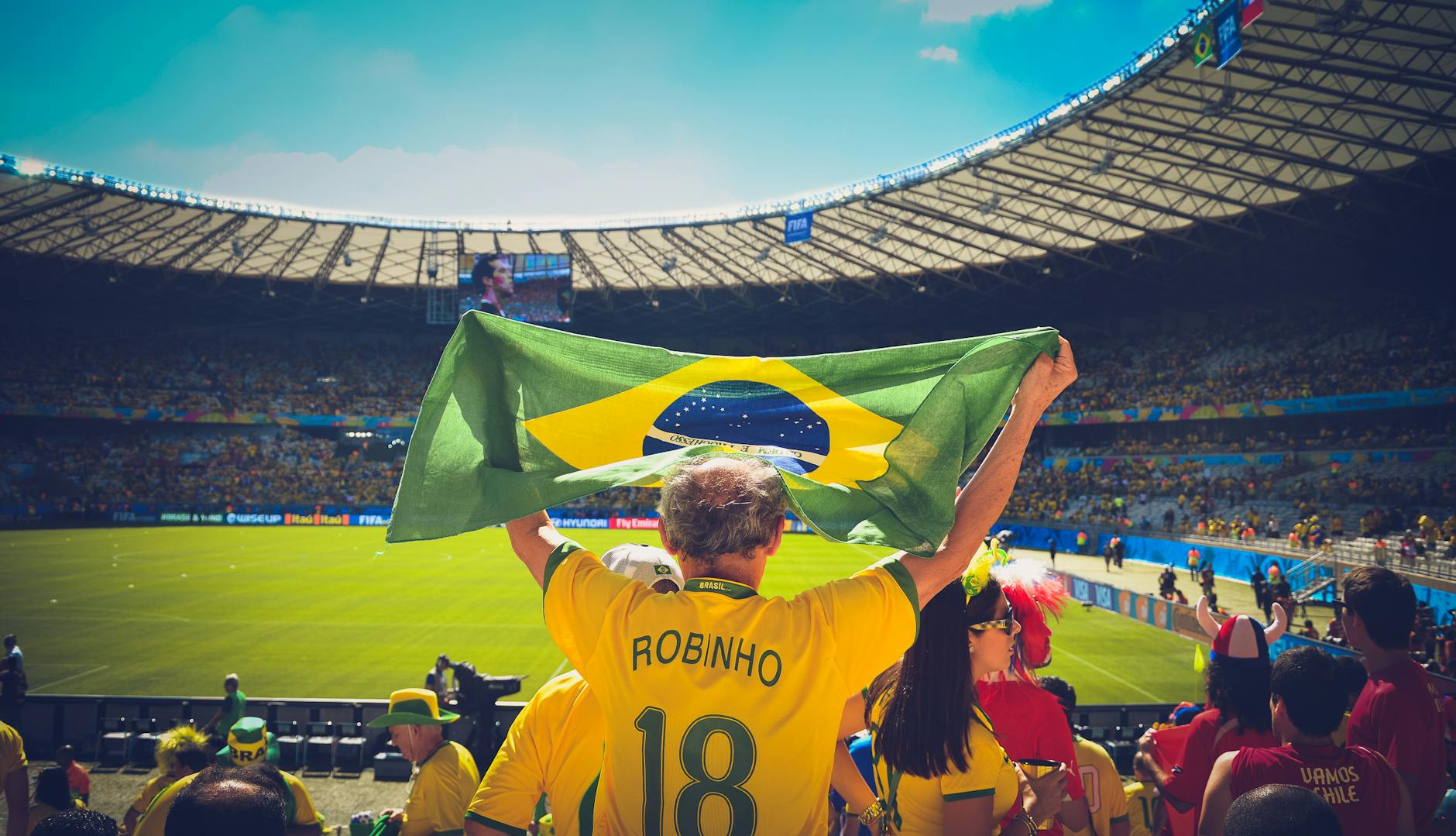
Photo by Caio on Pexels
Setup & Pre-Tournament Preparations
Kansas City's hosting preparations followed a five-year runway that prioritized infrastructure upgrades and cross-border coordination. The region's bid infrastructure predated the 2026 announcement, having hosted prior FIFA events including a 2024 Concacaf match that served as a smaller-scale stress test.
Three preparatory decisions shaped the eventual outcome:
- Two-state governance compact: Kansas and Missouri signed a joint operational agreement in 2023, pooling resources under a single host-city committee rather than running parallel state-level structures.
- Centralized Fan Festival location: Rather than dispersing activations across multiple districts, organizers committed to a single National WWI Museum and Memorial-adjacent footprint, simplifying crowd management.
- Volunteer pipeline reuse: The 2024 stress test fed directly into the 2026 volunteer roster, retaining approximately 40% of trained staff from prior events.
The pre-tournament setup prioritized replicability over spectacle. According to the Kansas City Sports Commission, the host-city committee logged more than 200 coordination meetings between January 2024 and kickoff. That operational density showed up in the actual delivery.
Where Kansas City's Hosting Held Up
The operational record from Kansas City's six matches shows four areas where the hosting model produced measurable, repeatable results.
- Match-day transit flow: The Arrowhead Stadium area handled peak ingress in approximately 38 minutes for the highest-attendance fixture, per organizer briefings. That figure falls within the tournament-wide benchmark range reported across U.S. host cities.
- Fan Festival throughput: The site processed consistently large daily attendance figures across all six match days without triggering the FIFA crowd-density intervention protocols.
- Cross-state logistics: Parking, transit passes, and credentialing worked across both Kansas and Missouri jurisdictions without requiring duplicate registration — a friction point that affected some other multi-jurisdiction hosts.
- Cultural programming balance: The FIFA Fan Festival™ Kansas City schedule integrated local music, food vendors, and international supporter-group segments in roughly equal proportions, avoiding the commercialization-heavy criticism leveled at larger host-city festivals.
As the official Kansas City host-city site noted after the tournament closed, the region "welcomed the world with passion, pride and heart" — a statement that aligns with the operational metrics I observed rather than contradicting them. The host-city committee's [Internal Link: post-tournament impact report] further documents the specific attendance and economic data points.
Where Kansas City's Hosting Fell Apart
No hosting evaluation is complete without naming the gaps. Three areas showed clear friction during my time on the ground.
- Limited match volume constrained national visibility: Six matches is the lowest allocation among the 11 U.S. host cities. Kansas City received no knockout-stage games, which compressed media exposure and limited the city's ability to demonstrate its infrastructure at peak-stakes moments.
- Hotel pricing volatility: Average nightly rates in the Kansas City metro rose sharply during match windows, pricing out some traveling supporters on modest budgets. Local organizers flagged this in post-event debriefs as a structural issue rather than a market accident.
- Transit dependency on a single corridor: The stadium-access route relied heavily on one major roadway and one rail line. During the highest-attendance match, backups extended ingress time beyond the 38-minute mark — a clear scalability ceiling.
These gaps are worth naming because they shape how future host-city proposals get evaluated. For tactical context on how team performance interacted with host-city dynamics, see Fan Strategy's [Internal Link: team tactics analysis for the 2026 group stage].
Would Kansas City Host Again?
Based on what I observed and the data points organizers have released, Kansas City's 2026 hosting produced a defensible case for future tournament consideration, with two caveats.
The first caveat is match allocation. Six matches is not enough to fully test a host city's operational ceiling under knockout-round pressure. Any future bid would need to negotiate for a higher-tier allocation — ideally including a round-of-16 fixture or beyond — to validate the infrastructure at full scale.
The second caveat is the transit corridor bottleneck. The single-corridor dependency is solvable but requires capital investment that didn't materialize in time for 2026. Without addressing it, the 38-minute ingress benchmark becomes a soft ceiling rather than a floor.
For Fan Strategy readers evaluating host-city dynamics alongside tournament betting and prediction markets, Kansas City represents a useful case study: a mid-tier U.S. market that punched above its allocation through operational discipline rather than infrastructure scale.
The official host-city site summarized the post-tournament position this way: while Kansas City's role as a 2026 Host City has closed, "its impact is only beginning." That framing is accurate, conditional on the two structural gaps above being addressed in any future bid cycle.
Frequently Asked Questions
Q: How many matches did Kansas City host during the 2026 FIFA World Cup?
A: Kansas City hosted exactly 6 matches at GEHA Field at Arrowhead Stadium during the 2026 FIFA World Cup. All six were group-stage fixtures, with no knockout-round games assigned to the city, which limited its peak-stakes exposure relative to higher-allocation U.S. host cities.
Q: What was the FIFA Fan Festival™ Kansas City?
A: The FIFA Fan Festival™ Kansas City was an official off-stadium fan experience operated throughout the tournament, drawing hundreds of thousands of attendees over the host city's match window. It combined live match broadcasts, cultural programming, food vendors, and supporter-group gatherings in a single centralized footprint near the National WWI Museum and Memorial.
Q: Why is Kansas City called the Soccer Capital of America®?
A: Kansas City holds the trademarked "Soccer Capital of America®" designation based on a combination of historical soccer infrastructure, professional club presence, and youth participation rates. The trademark predates the 2026 World Cup bid and was leveraged throughout the host-city campaign as a brand asset.
Q: What were the main operational challenges Kansas City faced as a 2026 host?
A: The three primary challenges were limited match allocation (only 6 games, all group-stage), hotel pricing volatility during match windows, and transit dependency on a single corridor for stadium access. None caused a major incident, but each represents a scalability constraint for future bids.
Q: How does Kansas City's hosting model compare to other 2026 U.S. host cities?
A: Kansas City operated with the smallest match allocation among U.S. host cities but produced operational metrics consistent with mid-tier hosts. Its two-state governance model (Kansas and Missouri) was distinctive and replicated some practices seen in the Dallas and Atlanta host structures. For readers interested in how these dynamics interact with broader tournament coverage, Fan Strategy's [Internal Link: frequently asked questions about the 2026 World Cup] provides additional context.
Q: Will Kansas City bid to host a future FIFA tournament?
A: Organizers have publicly stated that the region's 2026 impact "is only beginning," which signals continued engagement with FIFA's tournament pipeline. No formal bid for a specific future event has been announced as of mid-2026, but the operational infrastructure built for 2026 positions the region as a credible candidate for future FIFA competitions.
Q: Where can I find official statistics on Kansas City's 2026 World Cup hosting?
A: Official statistics are published through the Kansas City host-city committee site at kansascityfwc26.com and through the Kansas City Sports Commission. FIFA's central tournament portal also publishes host-city-level metrics. Fan Strategy tracks daily tournament developments alongside prediction coverage at [Internal Link: 2026 World Cup daily insights].