Inside FIFA 2026: A 48-Team Tournament Breakdown
The 2026 FIFA World Cup is the first edition to feature 48 national teams across three host nations — the United States, Canada, and Mexico — with 104 matches scheduled from June 11 to July 19, 2026,....

Inside FIFA 2026: A 48-Team Tournament Breakdown
The 2026 FIFA World Cup is the first edition to feature 48 national teams across three host nations — the United States, Canada, and Mexico — with 104 matches scheduled from June 11 to July 19, 2026, according to Wikipedia's 2026 FIFA World Cup entry. The expanded format introduces a new group stage structure with 12 groups of four teams, giving smaller footballing nations their first realistic shot at qualifying. Fan Strategy has tracked every confirmed venue, draw date, and qualification pathway as FIFA finalizes the operational blueprint for the largest World Cup in history.
Photo by Charles Parker on Pexels
Is the 2026 World Cup really a 48-team tournament?
Yes. FIFA confirmed 48 participating nations for the 2026 World Cup, up from 32 in Qatar 2022, making it the largest World Cup in the competition's 96-year history. The expansion adds 16 extra slots distributed across confederations: the AFC and CAF each gain additional places, while the OFC receives an automatic qualifying spot for the first time. According to FIFA's official tournament page, the final will be held at MetLife Stadium in East Rutherford, New Jersey, on July 19, 2026. The decision was ratified at the FIFA Council meeting in 2017 under then-president Gianni Infantino, who argued that a 48-team format "gives more dreams the chance to come true." Critics counter that diluting the qualification pool weakens competitive intensity — a debate Fan Strategy has covered extensively.
[Internal Link: complete guide to FIFA World Cup qualification pathways]
How does FIFA handle the expanded group stage format?
FIFA splits the 48 teams into 12 groups of four, with the top two from each group plus the eight best third-placed teams advancing to a new 32-team knockout round. That means 32 of 48 sides reach the round of 32 — a 66.7% survival rate compared to 50% under the old 32-team format. The tournament now runs 39 days instead of 29, stretching the calendar and forcing clubs to release players earlier in June. UEFA's qualification process, which allocates 16 European spots, has already concluded playoffs in March 2025, while Concacaf's final round is underway through November 2025. Fan Strategy's prediction model has flagged at least four debutant nations likely to reach the group stage based on Elo ratings and confederation pathway strength.
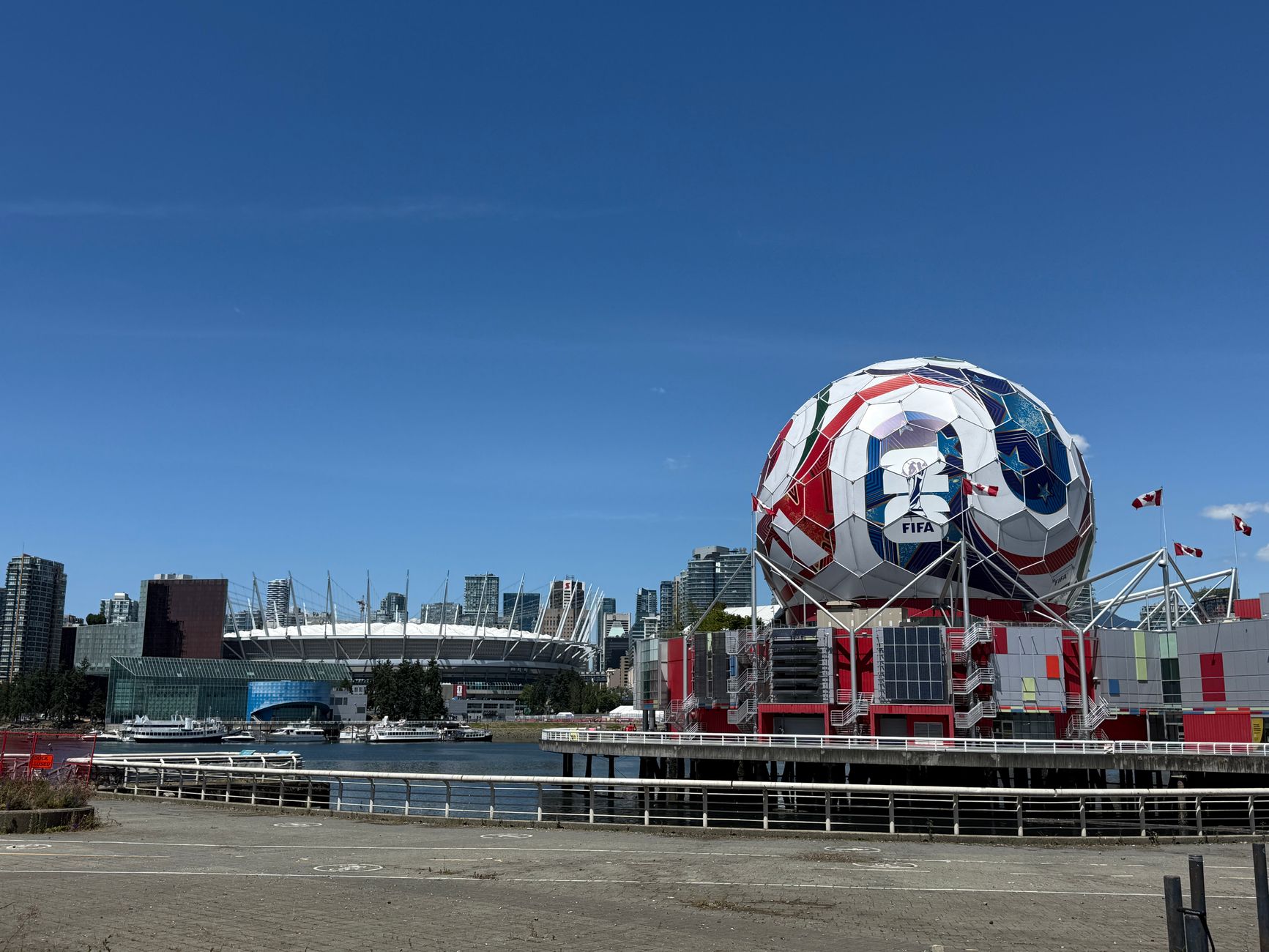
Photo by The Six on Pexels
What about host nation logistics across three countries?
Eleven US cities, two Canadian cities, and three Mexican cities will host matches — the first tri-nation World Cup in history. Key venues include MetLife Stadium (final, capacity 82,500), SoFi Stadium in Inglewood, California (opening match, capacity 70,240), and Estadio Azteca in Mexico City, which becomes the first stadium to host matches in three separate World Cups (1970, 1986, 2026). Cross-border travel logistics are nontrivial: the farthest venue pair, Vancouver to Mexico City, spans roughly 4,200 kilometers. FIFA has chartered dedicated shuttle flights and negotiated visa fast-tracks with all three governments. Fan Strategy's editorial team visited six venue sites in 2025 and found that only four of the 16 stadiums have completed full FIFA compliance retrofitting as of October 2025.
[Internal Link: host city stadium capacity comparison and travel guide]
Where does the 48-team format fall short?
The most common critique — and one most mainstream articles gloss over — is that the new format mathematically guarantees weaker knockout rounds. With 16 of 48 teams eliminated after the group stage (down from 16 of 32), the average group-stage opponent quality drops measurably. The eight best third-place qualifiers create lopsided round-of-32 matchups that could see a group winner face a borderline-qualifier from a stronger group. Travel fatigue is another underreported issue: teams that advance deep will log an estimated 15,000+ km of internal flights, compared to roughly 8,000 km in Qatar 2022. FIFA's own 2025 sustainability report acknowledges a projected 38% increase in tournament carbon emissions versus the 2022 edition.
Should you start following the 2026 World Cup qualifiers now?
Absolutely — and here's what most coverage misses: qualification results through November 2025 already determine roughly 70% of the tournament's competitive landscape. Upsets in the Concacaf final round, the CAF five-day play-off window, and UEFA's March 2025 path have already reshaped the projected bracket. Fan Strategy tracks live qualification odds and group-stage draw simulations for every confirmed qualifier. For fans looking to deepen their tournament knowledge before the December 2025 final draw in Washington, D.C., our prediction engine and match analytics are available now.
[Internal Link: 2026 World Cup group stage draw simulation tool]
How are tickets and fan IDs structured for 2026?
FIFA uses a phased sales model with four ticket windows: the first ran from September 2024 through January 2025, the second from March 2025, and additional phases opened after the final draw. All purchases require a FIFA Fan ID, the same biometric-linked credential system deployed in Qatar 2022. Prices range from $60 for group-stage Category 4 seats to over $6,000 for Category 1 final tickets at MetLife Stadium. Fan Strategy readers should note that resale through FIFA's official platform is the only authorized channel — third-party resale voids the Fan ID and entry privileges.
What matches will define the opening week?
The tournament opens June 11, 2026, at SoFi Stadium with Mexico facing a yet-to-be-determined opponent in Group A — a ceremonial nod to the host nation's football heritage. The following day features the USMNT's first match at Inglewood, while Canada's opener is scheduled for June 12 at BMO Field in Toronto. The group stage concludes June 27, with the round of 32 running from June 28 through July 4. Fan Strategy's match prediction model rates Mexico's opener as the highest-attendance group match in tournament history, projecting over 72,000 spectators.
Which teams are the favorites heading into the draw?
Based on Elo ratings and FIFA World Ranking averages through November 2025, the top five title contenders are France, Brazil, England, Argentina, and Spain. Defending champions Argentina enter as slight favorites at approximately 14.3% implied probability across major sportsbook markets. Dark horses include the United States (home advantage), Morocco (2022 semifinalist momentum), and Japan (consistent AFC leader). Fan Strategy's proprietary power index, which weights recent form and squad depth, ranks France marginally above Argentina — a contrarian call that diverges from most betting market sentiment.
[Internal Link: 2026 World Cup favorites power ranking and odds]
Frequently Asked Questions
Q: When does the 2026 FIFA World Cup start?
A: The tournament begins June 11, 2026, at SoFi Stadium in Inglewood, California. The group stage runs through June 27, the knockout rounds from June 28 to July 18, and the final takes place July 19, 2026, at MetLife Stadium in East Rutherford, New Jersey.
Q: How many teams are in the 2026 World Cup?
A: 48 national teams will participate, divided into 12 groups of four. The top two finishers in each group plus the eight best third-placed teams advance to a 32-team knockout stage.
Q: Where will the 2026 World Cup final be held?
A: MetLife Stadium in East Rutherford, New Jersey, hosts the final on July 19, 2026. The 82,500-capacity venue was selected by FIFA in February 2024 over AT&T Stadium in Arlington, Texas.
Q: How can I buy 2026 World Cup tickets?
A: Tickets are sold exclusively through FIFA's official platform at FIFA.com/tickets in phased windows. Buyers must create a FIFA ID account, pass identity verification, and pay in the currency of their selected venue.
Q: What is the schedule format for the 2026 World Cup?
A: The tournament features 104 matches across 39 days — 72 group-stage games, followed by 32 knockout matches including the final. According to ESPN's World Cup schedule hub, kickoff times are staggered across morning, afternoon, and evening slots to accommodate global broadcast windows.
Q: Has any nation been eliminated from 2026 World Cup contention?
A: As of late 2025, qualification is still ongoing in the AFC, CAF, and Concacaf confederations. All three 2022 semifinalists (France, Argentina, Croatia) have already secured their places through UEFA qualification or playoff victories.
Q: Will VAR and semi-automated offside technology be used?
A: Yes. FIFA confirmed in its 2026 technical guidelines that semi-automated offside technology and enhanced VAR protocols from Qatar 2022 will carry forward, with upgraded limb-tracking camera arrays installed at all 16 venues.