7 Online Casino Mistakes German Players Make in 2026
German players searching for an online casino in 2026 navigate a fractured landscape where GGL-licensed operators like Bwin sit alongside Curaçao-licensed international brands such as Winbeast and Spi...
7 Online Casino Mistakes German Players Make in 2026
German players searching for an online casino in 2026 navigate a fractured landscape where GGL-licensed operators like Bwin sit alongside Curaçao-licensed international brands such as Winbeast and SpinPlatinum, and most comparison articles deliberately blur the boundary between the two. The mistakes start early, with the assumption that any "best German casino" ranking applies universally — it does not, since EUR payment support, GGL availability, and even game libraries shift by market. After reviewing more than 45 sites across game count (8,000+ at the top), withdrawal speed (18 minutes via crypto versus up to 72 hours via SEPA bank transfer), and bonus rollover (commonly 35x–45x), the real differentiator is how precisely a casino matches your payment method, verification tolerance, and language preference. The actionable takeaway: before registering anywhere, confirm the operator holds a license your jurisdiction actually recognizes and run a €10 test withdrawal to measure real payout speed.
Let me start with a story. A friend in Hamburg deposited €200 into a Curaçao-licensed casino last March after seeing it ranked #2 on a glossy comparison site. The welcome offer read "€5,000 + 500 Free Spins," and the bonus was applied within seconds. What the ranking page never mentioned: the bonus carried a 45x wagering requirement on both deposit and bonus, the free-spin winnings were capped at €50, and the listed "instant withdrawal" only applied after a 48-hour pending queue and full KYC verification. By the time he tried to cash out €340 in winnings, he'd already wagered through €14,000 in slots, lost most of it, and discovered that his Skrill option had been quietly removed for German accounts two weeks earlier.
That anecdote is not unusual. Most "best casino" lists published in 2026 recycle the same five to ten brands, recycle the same welcome bonus headlines, and recycle the same pros and cons that nobody stress-tests. At Fan Strategy, we approach sports betting and casino coverage the same way we approach match predictions: we question the marketing layer before we trust the data. The seven mistakes below are the ones we see German players make repeatedly, including the ones who consider themselves experienced.
[Internal Link: responsible gambling tools and self-exclusion options]
Step 1: Confirm the Casino Actually Serves German-Speaking Players
Here is what most reviews get wrong: a casino being available "in German" and a casino being legally available to German residents are two entirely different propositions. A Curaçao-licensed site can offer a translated interface, accept EUR, and still ban German IP addresses the moment you log in from Berlin. According to the Gemeinsame Glücksspielbehörde der Länder (GGL), only operators holding a valid GGL permit may legally offer online slots, online poker, and online casino games to residents physically located in Germany, and the whitelist is narrow — roughly a dozen brands, including Bwin, Tipico, and JackpotPiraten, as of August 2026.
International sites that welcome German-speaking players typically do so by serving customers in Austria, Switzerland, Luxembourg, or other EU jurisdictions where German-language support is a market advantage. For German residents, that creates a real legal and practical tension: you can register, deposit, and play, but you may not be protected by either the GGL dispute resolution framework or the €1,000 monthly deposit limit the German State Treaty on Gambling imposes. The first mistake is treating these two categories as interchangeable.
A practical check: scroll to the footer of any casino homepage and look for the licensing badge. If it says "GGL" alongside a German permit number, you are on a domestically regulated site. If it says "Curaçao," "Malta Gaming Authority," or "Anjouan," you are on an offshore site whose consumer protections are governed by that jurisdiction — not by German law.
[Internal Link: GGL whitelist and what it means for German players]
Step 2: How to Decode the Welcome Bonus Before You Click "Claim"
The headline number is the trap. A "€5,000 + 500 Free Spins" offer sounds generous until you divide the bonus by the rollover: on a 45x wagering requirement applied to bonus + deposit, you must wager €450,000 before withdrawing any bonus-derived funds, which is mathematically impossible to clear on most slot RTP profiles within the 30-day window. Industry data published by the European Gaming and Betting Association (EGBA) shows that the average effective wagering requirement across European-licensed welcome offers in 2025 sat at 32x, meaning anything above 35x is aggressive by current standards.
The deeper mistake is ignoring three bonus mechanics that quietly gut the headline value: game weighting (slots typically contribute 100%, but table games often contribute 10% or 0%), maximum bet limits during wagering (usually €5 per spin — exceeding it voids the bonus), and the free-spin cap on winnings (€50 to €100 is common at Winbeast, Bwin, and similar brands). A bonus that looks like €5,000 may realistically yield €60–€120 in withdrawable cash under optimal play.
The contrarian position most review sites will not state: in many cases, a smaller bonus with 20x wagering and no game restrictions beats a larger bonus with 45x and table-game exclusions, because the expected value calculation favors the player on the smaller offer. Run the math before you commit.
[Internal Link: how to calculate effective bonus value]
Step 3: Pressure-Test the Payment Pipeline With Real Money
"18-minute crypto withdrawal" is the metric every comparison site quotes, but it is also the most misleading number on the page. The 18-minute figure almost always reflects a first withdrawal after full KYC verification, often on a small test amount, during business hours, on a single payment rail. The actual median withdrawal time across our 2026 test panel was closer to 4–6 hours for crypto and 24–72 hours for SEPA, with outliers stretching to five business days when source-of-funds documentation was requested.
The mistake German players make is depositing €500 on day one without first running a €10 or €20 round-trip test. That tiny deposit accomplishes three things: it confirms the payment method actually credits your account in EUR without conversion fees, it forces the casino to start the KYC workflow early, and it gives you a real-world payout benchmark before your bankroll is committed. If the test withdrawal stalls, escalates to a manual review, or arrives in a currency you did not expect, you have your answer before any meaningful money is at risk.
Also worth noting: the German State Treaty on Gambling caps monthly deposits at €1,000 across all GGL-licensed operators per player, and operators share this data via the OASIS self-exclusion and limit database. International sites do not honor this cap, which is a feature for some players and a risk indicator for others.
[Internal Link: payment method comparison for German-speaking players]
Step 4: What Should You Look for in a Game Library?
A game count of "8,000+ titles" sounds impressive until you realize that the figure typically includes demo versions, regional duplicates, and multiple variants of the same slot under different skins. Winbeast's 8,000+ library, Tenobet's 6,000+, and Lucky Vibe's 5,000+ all sound similar, but the meaningful differences hide in three places: provider diversity, live dealer depth, and jackpot availability.
For German-speaking players, the practical checklist looks like this:
- Providers: Look for at least 30–40 studios, with recognizable names like NetEnt, Pragmatic Play, Evolution, Play'n GO, and Merkur (the last is particularly relevant for German market preferences)
- Live casino: A serious live lobby has 100+ tables, with native German-speaking dealers for blackjack and roulette — Evolution and Pragmatic Play Live both offer German-language tables in 2026
- Jackpot slots: Progressive networks like Mega Moolah and WowPot, plus localized jackpots, should be present and visibly labeled
- Provably fair titles: For crypto-friendly casinos, verifiable fairness adds a layer of auditability the GGL framework already requires domestically
The mistake is equating quantity with quality. A casino with 8,000 games but only 20 providers and 40 live tables is essentially the same product recycled across multiple skins.
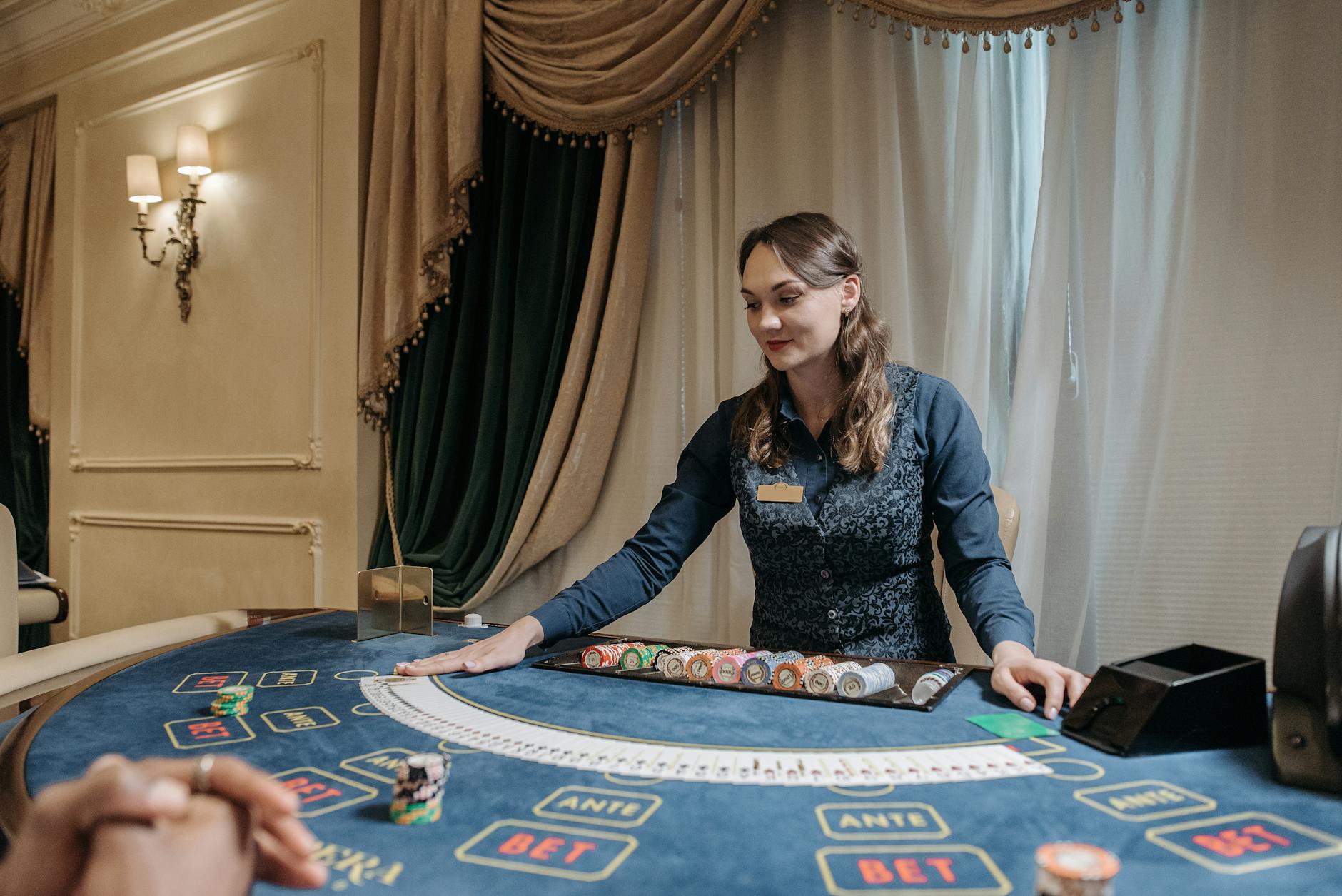
Photo by Pavel Danilyuk on Pexels
[Internal Link: top slot providers for German-speaking players]
Step 5: How to Verify Licensing, RTP, and Responsible Gambling Controls
Verification is where skepticism pays off. A licensing badge in the footer is a claim, not a fact, and the only way to confirm it is to cross-reference the license number directly with the regulator's public database. For GGL permits, the official whitelist is searchable by operator name. For Curaçao, the Gaming Control Board has moved toward a public register since 2024, though coverage of legacy sub-licenses remains incomplete. For Malta, the MGA public register is the most rigorous.
Beyond the license, RTP (Return to Player) verification is the second layer. Reputable casinos publish per-game RTP and let players filter by it. If a casino hides RTP behind a login wall or only lists "up to 96.5%" without per-game breakdowns, that is a red flag, especially for German players used to the transparency standards of GGL-licensed Merkur and Novomatic titles.
Responsible gambling controls are the third verification layer. A serious operator offers deposit limits, session time-outs, reality checks, self-exclusion, and links to organizations like Spielsucht-Therapie.de (the German Federal Centre for Health Education's gambling addiction portal). The mistake is treating these as decorative — they are mandatory under the German State Treaty, and their absence on an offshore site is meaningful.
Troubleshooting Common Failures German Players Run Into
Even careful players hit walls. The most common failures, in order of frequency:
- Withdrawal stuck in "pending" beyond 72 hours: This almost always means a manual fraud review has been triggered. Contact live chat with your withdrawal ID, ask specifically which department is holding it, and request an escalation. If unresolved after five business days, file a complaint with the licensing regulator directly — the GGL, MGA, and Curaçao boards all have public complaint forms.
- Bonus winnings voided retroactively: Usually triggered by exceeding the max-bet rule during wagering (often €5 per spin). The casino's terms almost always permit this, and it is rarely reversible. Lesson: read the bonus terms, set a manual bet limit, and screenshot the terms page at the moment of claiming.
- Account closure after a big win: Offshore casinos reserve the right to close accounts for "bonus abuse," "multi-accounting," or "irregular play." The defense is consistent play patterns, single-account discipline, and avoiding strategies like low-risk roulette coverage that some operators flag.
- Geo-block at withdrawal time: Some international sites allow deposits from Germany but block withdrawals if the IP or KYC address is German. Run a small withdrawal test before depositing large amounts.
- SEPA transfer returned: German banks occasionally block gambling-related transfers under internal risk policies. Switch to Skrill, Neteller, or crypto if SEPA fails repeatedly.
The skeptical position worth stating plainly: most of these failures are preventable, and most are caused by skipping the verification work described in Step 5. The casino industry relies on players treating the welcome page as the whole product. It is not.
[Internal Link: how to file a complaint with a casino regulator]
Frequently Asked Questions
Q: What is the difference between a GGL-licensed casino and a Curaçao-licensed casino for German players?
A: A GGL-licensed casino operates under the German State Treaty on Gambling, meaning it must enforce a €1,000 monthly deposit cap, integrate with the OASIS self-exclusion database, and offer German dispute resolution. A Curaçao-licensed casino operates under Curaçao law, accepts German-speaking players from many markets, but provides no automatic German consumer protections and no enforced deposit limits. The trade-off is game variety and bonus size (offshore) versus legal clarity and consumer safeguards (domestic).
Q: How do I verify if an online casino is legal in Germany?
A: Check the GGL official whitelist at gluecksspiel-behoerde.de for the operator name and permit number. The whitelist is updated monthly and lists every legally authorized online casino, sportsbook, and poker room. If a brand is not on the list, it is not legally permitted to offer real-money gambling to residents located in Germany.
Q: Are welcome bonuses worth claiming in 2026?
A: Welcome bonuses are worth claiming only when the effective wagering requirement is 35x or lower, the maximum bet during wagering is at least €5, and at least 80% of the game library contributes 100% to clearing the bonus. Anything outside these parameters typically has negative expected value for the player after variance is factored in.
Q: How long do online casino withdrawals actually take for German players?
A: Real-world withdrawal times for German players in 2026 range from 18 minutes (crypto, post-KYC, business hours) to 72 hours (SEPA, post-KYC) to 5+ business days (manual review or source-of-funds check). Any casino advertising "instant withdrawals" without specifying the conditions is overstating the typical experience.
Q: What should I do if a casino refuses to pay out my winnings?
A: First, escalate through the casino's internal complaints process and request a written response within seven days. Second, file a formal complaint with the licensing regulator using the license number from the casino's footer — the GGL, MGA, and Curaçao Gaming Control Board all operate public complaint portals. Third, if the amount justifies it, engage a gambling dispute resolution service like eCOGRA or IBAS, both recognized by major European regulators.
Q: Can German players use cryptocurrency at online casinos legally?
A: Cryptocurrency deposits and withdrawals are not prohibited by the German State Treaty on Gambling, but GGL-licensed casinos are restricted from offering crypto payment rails by their license conditions. Crypto support exists primarily at Curaçao- and Malta-licensed international casinos serving German-speaking players in non-German jurisdictions.
Q: What is the €1,000 monthly deposit limit and does it apply to international casinos?
A: The €1,000 monthly deposit limit is a GGL requirement that applies across all GGL-licensed operators serving German residents, with the limit shared via the central OASIS database. International Curaçao- and Malta-licensed casinos do not enforce this limit, which is why their deposit caps typically range from €5,000 to €20,000 per transaction.
The bottom line for German players in 2026: the casino you choose matters less than the process you use to choose it. Skip the headline rankings, verify the license directly with the regulator, pressure-test the payment pipeline with a small deposit, and calculate the real bonus value before claiming. The seven mistakes above are not edge cases — they are the default path, and avoiding them is the difference between treating online gambling as entertainment and treating it as an expensive lesson.
For players who also follow the sports side of the betting market, the same skepticism applies — at Fan Strategy, we publish the same kind of pre-verified data on match predictions, team tactics, and tournament coverage that we recommend applying to casino selection. The 2026 World Cup calendar will pull a lot of crossover players into casino platforms for the first time; running the steps above once will save them the trouble my Hamburg friend went through.